Aug 30, 2016

Posts Tagged ‘sexual addiction recovery’

Why your critics aren’t the ones who count

Posted at March 12th, 2014
Posted by Geoff Steurer
Tags: - - - - -
Categories: Pornography Addiction, St. George Utah Pornography Addiction Treatment
2 Comments »

)

Brene Brown has taught powerful truths about vulnerability and shame. In this presentation, she takes her message further by specifically addressing how to handle those who might criticize our efforts to create something new. People in recovery, both men and women, often hold back from taking risks to try new behaviors, such as sharing their feelings, interacting differently with loved ones, and other new behaviors.

13 myths about pornography addiction

Posted at January 14th, 2014
Posted by Geoff Steurer
Tags: - - - - - - - -
Categories: Pornography Addiction, St. George Utah Pornography Addiction Treatment
2 Comments »
by Brannon Patrick
LifeStar Lehi

2013-26673-28-300x2141. Sexual addiction shouldn’t be treated like a real addiction.

Compulsive pornography use has all the elements of an addiction. The rate and duration increase over time. People use it to numb out pain or medicate their emotions. It causes disconnection, denial and trauma in relationships.

2. If you’re active in church you’re less likely to have a problem with pornography.

That’s not the case at all. Utah’s population is more than 60 percent Latter-day Saint and it has the some of the highest pornography subscription rates in the country. I have several theories on that, one of which is that our culture is sadly shame-based. Shame is the driving force behind addiction.

3. When people get married, their pornography addictions will stop.

This isn’t true, because pornography addiction, which is a form of sexual addiction, isn’t about healthy sex. It’s not about an intimate relationship. Sex doesn’t fulfill the lustful hit a person gets from pornography. This misconception leads to other misconceptions as well, like partners of addicts believing they can have sex more to the control their spouse’s addiction.

4. Feeling enough shame about an addiction will cause someone to seek help.

Feeling shame will cause you to hide, to go into secrecy. You’re not going to be driven to confront a problem if you have a lot of shame. Guilt is slightly different, if it’s healthy guilt. Knowing you’ve done something wrong could lead someone to treatment, but most often, it’s just pain and tough consequences that bring people to my office.

5. If the addict wants it enough, God will always take away their addiction.

I believe that God can do this, but I don’t believe that God often does. Many people desperately want to overcome their addictions, but still continue to struggle. I don’t see many miracles in the sense of people being cured simply because they have an experience with God. What I do see is that whoever gets into recovery has to have God involved to progress. Addicts use the 12-Step program and learn how to surrender to a “higher power.” God is there to help them walk the path of overcoming their addiction.

6. Sobriety is recovery.

Being sober is not enough. Recovery is a lifestyle change. It’s being transparent. It’s overcoming shame. It’s being humble and honest. Sobriety is a byproduct of recovery.

7. Compulsive pornography use only affects the user.

It’s like any addiction. It’s an attachment disorder, meaning if affects relationships. In order for someone to be addicted, they need to be in some denial, which prevents them from being authentic. It causes trauma for parents, children, spouses and all kinds of family relationships. It definitely doesn’t just affect the user.

8. Spouses of addicts should just forgive and forget. It’s not that big a deal.

Spouses are truly traumatized by their partners’ addictions in ways they might not even realize. They need to learn how to cope. They need their own recovery plan and support system.

9. Every ecclesiastical leader will know how best to help a pornography addict.

You may get the help you need from your ecclesiastical leader alone. You may not. Often well-meaning ecclesiastical leaders are untrained in dealing with this issue and are subject to many of the same misconceptions as the general population. In an effort to be helpful, sometimes religious leaders say things that unknowingly undermine the spouse as well as the person struggling with the addiction.

10. Once you’ve stopped compulsively viewing pornography and repented, you’re in the clear. The problem won’t resurface.

This is a common misconception that leads to so many more, like “If I’ve repented, I don’t need to tell my future spouse about it because I’m done.” Addiction is a disease and it’s a lifelong disease. It’s not just a moral issue. Even after repentance, you still have to work your recovery to stay sober or you’ll fall back into addiction.

11. My teenager probably hasn’t been exposed to pornography.

If you believe that, you’re most likely in denial. It’s everywhere. Almost every teenager has been exposed to pornography in some way. Parents who don’t accept it are hurting their children. Children need them to talk openly about what they might feel, what they should do and whom they should talk to when it happens.

12. Discussing pornography with a prepubescent child is unnecessary.

Exposure to pornography is happening at younger and younger ages. If they’re old enough to view it, they’re old enough to talk about it. The game has changed. The talk needs to start sooner and happen more often. Either children will learn about sex and pornography from friends at school or from their parents. It’s better to get to them first before they learn elsewhere.

13. Viewing pornography is only a problem among men.

Pornography use is increasing in all forms. It’s not just a male problem. I hear that more and more women are involved with it, but I don’t see more and more women in my practice. My theory on that is that it’s even more culturally shameful for women who have a problem, so they’re even less likely than men to come out about it.

 

Protecting Children and Families from Pornography

Posted at November 14th, 2013
Posted by Geoff Steurer
Tags: - - - - -
Categories: Protecting Children from Pornography, Protecting Families from Pornography, St. George Utah Pornography Addiction Treatment
1 Comment »


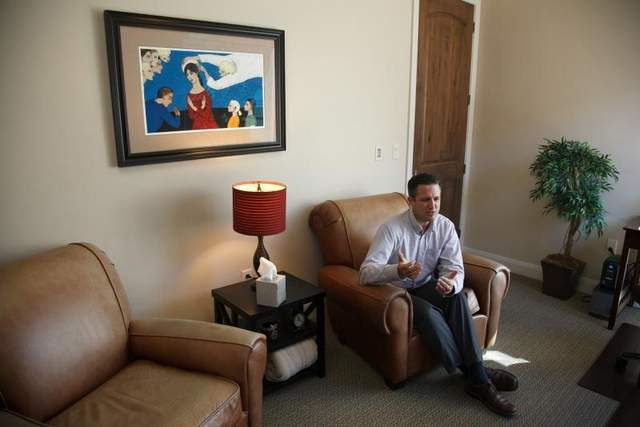
steurer office

Shedding Light on Pornography Addiction
by Lisa Larson
The St. George Spectrum
November 13, 2013

It’s a vice that was once limited to back alleys, adult stores and shady parts of town; an addiction that required a little bit of effort to pursue.

Now it’s available no matter where you are, regardless of your age — all you have to do is click the mouse, type a keyword or follow a link and pornography is instantly on your screen.

Despite its pervasiveness, pornography is a topic of discussion that is still very much taboo in some circles. The Utah Coalition Against Pornography plans to address this aspect of the issue at this weekend’s regional conference titled Protecting Children and Families from Pornography.

“Every parent who has children in their home and an Internet connection needs to be at this conference,” said Geoff Steurer, a licensed marriage and family therapist who is involved in putting on the conference. “You say the word ‘pornography’ and everyone wants to be as far away from it as possible, (but) we want parents to be empowered and armed with good information.” … read the rest of the article

Rebuilding Trust After Sexual Betrayal

Posted at October 26th, 2013
Posted by Geoff Steurer
Tags: - - - - - - - - -
Categories: Couples Pornography Addiction Recovery, Partners of pornography addicts, Pornography Addiction, St. George Utah Pornography Addiction Treatment
3 Comments »

math-pic8by Geoff Steurer, MS, LMFT
Founder and Director
LifeStar of St. George, UT

I regularly meet with men who tell me they have given up pornography and sexual acting for good and have no intentions of going back. They share how they’ve moved from darkness to light. They talk about the mighty change in their heart. I have no doubt they’re experiencing changes in their thoughts, feelings, and intentions.

However, their wives are full of doubt.

One minute he admits to having a secret life filled with sexual behaviors and the next minute he tells her he’s healed and never going back to that life. She’s wondering what happened in-between those two very distant points on the continuum.

This scenario reminds me of when I was in school doing math problems and trying convince my math teacher that I really did know the answer to the math problem, even though I wasn’t showing my work on paper. For all she knew, I was looking up the answer in the back of the book or using a calculator. No matter how hard I tried to convince her I knew how to do algebra, she wanted to see my work.

A betrayed wife needs to know how her husband moved from a life of secrets and addiction to a life of integrity. She wants to see evidence of his journey. This is critical so she can trust what she sees in front of her.

Not only does she need to see his work, but he also needs to know he can do the work. I believe in miracles and I believe that the change of heart is the first miracle that gives a man the power to face his story and make the necessary physical, emotional, spiritual, sexual, and relational changes necessary for long-term recovery. However, I don’t believe that one change of heart is enough to sustain any man in long-term recovery without him doing additional work.

Since there are no shortcuts with true recovery, showing how he went from addiction to recovery shouldn’t be difficult if he’s really doing the work. If he can’t show his work, then he’s not doing the work.

He can show his work by reaching out and opening up about his process. He can talk about what he’s learning in therapy, group therapy, 12-step meetings, his readings, and meetings with his church leader. He can show his work by interacting differently with his wife, children, and family members. His priorities will change as he spends less time in front of the TV or computer and more time in healthy living. If things look and feel the same as they did when he was active in his addiction, even though he says he’s changed, he’s not going to convince anyone until he can show his work.

Like a good math teacher, a good recovery program will help a man break down his recovery into manageable steps so he can know what he’s doing, how he’s doing it, and how to maintain it for life. He’ll also learn how to reach out to his wife and other supports to show his work. Recovery is not a mystery. It’s possible because of measurable steps taken every day to build a life of integrity and connection.


Love You, Hate the Porn

Posted at January 17th, 2013
Posted by Geoff Steurer
Tags: - - - - - - - - - - - - -
Categories: Pornography Addiction, St. George Utah Pornography Addiction Treatment
1 Comment »

Net Nanny invited Geoff Steurer to present an online webinar on the subject of couples recovery from pornography addiction. He presented an hour-long webinar titled “Love You, Hate the Porn: Healing a Relationship Damaged by Virtual Infidelity.”

Does Your Marriage Need a Boost?

Posted at December 20th, 2012
Posted by Geoff Steurer
Tags: - - - - - - -
Categories: Couples Pornography Addiction Recovery, Marriage, Partners of pornography addicts, Pornography Addiction, St. George Utah Pornography Addiction Treatment
No Comments »


We are starting our first-ever Marriage Recovery workshop for couples who want to do more focused work to strengthen their marriage in the recovery process. This is more than just an informational workshop. We will work with couples to help them practice skills and discuss what they’re learning with each other and the other couples. The workshops will be held once per month and will cover six different topics. We will repeat the six topics twice per year. Couples, who have completed LifeSTAR Phase 1, can attend any of the six in any order, according to their specific recovery needs. Here are the six topics we’ll be covering in the upcoming months:

January 4 - The recovering marriage: his, hers, and ours

February 8 - Handling a slip as a couple

March 1 - Holding your partner’s pain in recovery

April 5 - Physical intimacy in recovery

May 3 - Connecting emotionally and spiritually in recovery

June 7 - Preventing burnout in couples recovery


The cost for each 2-hour workshop is $75 per couple. Please call 435-688-2123 to reserve your spot. Limited to 12 couples.

Recovery is a lifestyle transformation

Posted at October 21st, 2012
Posted by Geoff Steurer
Tags: - - - - - - - - - - -
Categories: Pornography Addiction, St. George Utah Pornography Addiction Treatment
1 Comment »

by Geoff Steurer, MS, LMFT
Director - LifeSTAR St. George, UT

I recently spoke with an individual who described some of the changes he had gone through over the past year of recovery from pornography addiction. He talked about his decision to literally throw away a trash bag full of over 150 DVDs that had inappropriate content. He said that he deleted and threw away over $1,000 worth of CDs and audio files of music that were full of suggestive and trashy lyrics. Additionally, he talked about dietary and other changes he and his wife had made to further balance their lives and create healthy living. His final commentary on this significant lifestyle transformation was, “I would give away everything I own to feel the way I now feel.”

As amazing as it is to hear of the efforts and sacrifice this individual was willing to make in his recovery, it doesn’t completely surprise me. It matches the pattern I’ve seen over years of working with hundreds of individuals and couples working to break free of the chains of pornography and sexual addiction. True recovery comes when the individual goes beyond simply trying to stop the acting out behavior and begins to change the other areas of life that support the addiction.

The “life” in LifeSTAR is a reminder that lifestyle transformation is the foundation for long-term recovery. If we only focused on behavioral control, we would set everyone up for long-term failure. Eventually, the lifestyle choices would create an environment where the addiction would return, sabotaging all of the genuine efforts at changing their life.

We have observed that there are five areas where these lifestyle transformations have the most impact on long-term recovery. They are: physical, emotional, spiritual, sexual, and relational. Even though there are lots of areas we should all be improving, these five areas seem to have a special influence on sexual addiction recovery.

I encourage you to take a minute right now and survey your own individual recovery efforts. Are you simply trying to “behave?” Or, are you actively working on these five areas to make improvements? Do you feel like a different person? Or, are you the same person, but just not acting out? The individuals who experience the deepest changes know they aren’t the same individuals they were when they entered recovery.

If you are simply “behaving” and don’t know where to start, I encourage you to sit down with your counselor, sponsor, or support group and design a specific plan that addresses these areas. Explore each of them in detail and see how each one could both support and undermine your recovery efforts.


Book Review: The Porn Trap by Wendy and Larry Maltz

Posted at February 14th, 2012
Posted by Geoff Steurer
Tags: - - - - - - - -
Categories: Pornography Addiction, St. George Utah Pornography Addiction Treatment
No Comments »

By Mark Chamberlain, PhD
Clinical Director, ARCH Counseling

Back in the 1980s, Wendy Maltz and her husband and fellow therapist, Larry, were not that concerned about pornography. Like most in the field, they thought it was essentially harmless. The use of porn was even promoted at professional trainings as a way to help couples reinvigorate their sex lives. Then the authors noted a trend: porn was moving couplesaway from being sexually intimate with each other. For too many of their clients, porn itself had become the object of desire. They wrote Porn Trap because “We believe you have a right to healthy, love-based sexual expression, and that today’s multi-media driven pornography is interfering with that right” (p. 8).

The authors share this gem of a line from the 14th Century Sufi poet, Hafiz:

Learn to recognize the counterfeit coins
that may buy you just a moment of pleasure,
but then drag you for days
like a broken man
behind a farting camel.

The Maltzs’ case material was gleaned from interviews with those whose lives have been depleted by porn. “While pornography may promise sexual freedom, it can eventually deliver a form of sexual oppression-robbing people of sexual innocence, sexual self-determination, and the skills to experience healthy relationships based on a loving connection with a real partner” (p. 8). The cases in the book make real the suffering, but also help illuminate the way out. And that’s one real value of the book: if you’re stuck, you read of others who have been, too, but have made their way out. When you’ve been stumbling in the dark, such rays of hope are precious.

Here’s what I appreciate most about the book: the authors back up their compassion and optimism by providing practical tools. They suggest steps for deciding whether porn is hampering your happiness and relationships, tactics for quitting porn if you decide it is a problem, and in-the-bedroom practices for turning your sex life around so that it can build closeness and fulfillment in place of the separation and depletion that pornography fosters. Wendy Maltz’s expertise in healthy sexuality and some great material from her previous books are distilled into the chapter entitled “A New Approach to Sex.”

Of the many tools the authors share, I’ll highlight a couple I find particularly helpful:

When you feel the gravitational pull of porn, here’s something you can do to literally come to your senses. It’s an exercise they entitle Shifting Your Attention. “A simple sensory awareness exercise can help you shift your attention away from what you’ve been thinking about and on to something else in your environment. For example, ‘Now I’m aware of the sun coming through the window.” Repeat and complete the phrase ‘Now I’m aware of…’ until you have identified five different things that you see. Continue the exercise stating five different things you are aware of hearing, then five different things you are aware of touching or feeling inside your body. This exercise can help center you sensually in the reality of your present environment and take you farther away from the fantasy world of porn” (p. 195).

This is a theme throughout the book: real life-everything from real events to real emotions to your flesh-and-blood lover-are antidotes to the unreal world of porn. This theme reaches its pinnacle in one of the final skills they cover, Involving Your Heart in Sex, which is needed because porn-informed sex is all about stimulation rather than heartfelt connection. When you are engaged in sexual activity:

  • Take a moment to touch your heart or your partner’s heart to activate or stay connected to feelings of caring and love.
  • Take time to smile and make loving eye contact with your partner.
  • Temporarily shift your awareness from your genital arousal to the attributes you most admire and appreciate about your partner.
  • Take time to verbally express your feelings of affection to your partner.
  • Touch in loving and affectionate ways that you have learned will be valued and appreciated by your partner.

Thank you Wendy and Larry for this invaluable book! Your deep care for those caught in the porn trap shines through. Your work is helping make that group smaller-one person, one couple at a time!

Mark Chamberlain, PhD, received his doctorate from Brigham Young University. He is a clinical psychologist specializing in the treatment of pornography addiction and other impulsecontrol problems. He is the co-author of “Love You, Hate the Porn: Healing a Relationship Damaged by Virtual Infidelity.” He and his wife, Jenny, live in the Salt Lake City area.


“Sex Addiction: Illness or Excuse?” on the Today Show

Posted at February 18th, 2011
Posted by Geoff Steurer
Tags: - - - - - - - - - -
Categories: General Sexual Addiction, In the news/media, St. George Utah Pornography Addiction Treatment
No Comments »

Visit msnbc.com for breaking news, world news, and news about the economy

UCAP Conference - a big success!

Posted at November 7th, 2010
Posted by Geoff Steurer
Tags: - - - - - - - - - - - -
Categories: Protecting Children from Pornography, Protecting Families from Pornography, St. George Utah Pornography Addiction Treatment
No Comments »

The Utah Coalition Against Pornography Southern Utah Regional conference was a huge success. There were over 700 people in attendance and the energy was palpable! We heard excellent keynote presentations from the Utah State Attorney General, Mark Shurtleff, and KSL VP of programming, Michelle Torsak. The workshops were also a huge success.

LifeSTAR also had a booth where we were able to answer questions about our program and educate those who stopped by on issues related to protecting children, families, and couples from the impact of pornography.

We met lots of great people, other organizations who are fighting pornography and it’s effects on others, and experienced an uplifting and powerful conference. Here are some of the other organizations also present at the conference: Fight the New Drug, SA Lifeline, LDS Addiction Recovery Support Groups, Windhaven Publishing, ARCH Counseling, Women for Decency, and Deseret Book.

We can’t wait to read the conference evaluations to see if this is something that can return year after year. Thanks to the UCAP board and staff, Pamela Atkinson, and Jill Burton, along with all of the volunteers who made this important event possible.

The next UCAP conference will be held in the Spring of 2011 up in Salt Lake City, so check their website in the next couple of months for details.