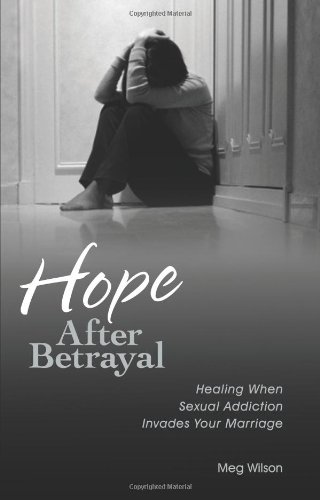
Mark Chamberlain, PhD, shares his review of this important book to help women who have been sexually betrayed by their spouses.
When the World Crumbles
by Jill Call, LMFT
Trauma shakes the very foundation on which you’ve built your life. Trauma is defined as a life-threatening event and, with betrayal trauma, it threatens the life you’ve built together. Your world can start to crumble when suddenly you discover your partner isn’t someone you know anymore.
As women, we mostly define ourselves in relation to others. “I am a wife. I am a mother. I am a sister. I am a friend.” Because we define ourselves by our relationships with others, betrayal trauma can have life-altering effects.
For example, you might think to yourself, “If my partner isn’t who I thought he was, then the life we’ve built together may not be real, and what about me is true anymore?” Or perhaps this one, “I don’t know him anymore. I don’t know myself anymore. And I don’t know my life anymore.” You can see the life-changing implications of such thoughts.
Trauma causes a myriad of symptoms. If your life has been threatened by betrayal trauma, you may experience fear, racing heart, anxiety, hyper vigilance, depression, loss of appetite, increase in appetite, apathy, low tolerance threshold, anger, sadness, impatience, losing your temper, crying, shaking, and other effects. You may begin to examine your life and fear that anything familiar cannot be trusted. That is one of the effects of betrayal trauma. It’s an earthquake that shakes the very foundation of the life you’ve built and trusted.
When betrayal trauma shakes the foundation of your life you may start to wonder if everything you’ve built has been right. You may start to question or even reject parts of your life that have always been your solid ground. This starts to create a crisis of belief and further shakes your foundation. The lyrics to a song by Parachute describe this well, “and I lost my faith, in my darkest day.”
Your ability to stand on solid ground, and have a place from which to be steadfast, strong and stable is crucial to recovery. In LifeStar we talk about “resourcing” or “getting grounded.” This refers to the recovery skill of creating stability, peace, and emotional safety for yourself. This can be done by setting boundaries, by intentional self-care, or by mindfulness meditation. There are so many ways to find your center and put you back on solid ground. When you’ve lost yourself in this crumbling world of betrayal trauma, finding your solid ground is essential to your recovery.
I recently took a trip to visit the Hoover Dam, which is on the border between Arizona and Nevada. This massive structure was built in the 1930’s with over 5 million barrels of concrete (4.5 million cubic yards). Just to give you some perspective: that’s enough concrete to pave a 2-lane highway from Seattle, WA to Miami, FL. The engineers estimated it would take nearly 80 years for all of that concrete to cure completely. To me, it’s instructive that although the foundation for the Hoover Dam is solid and strong, it has been curing and becoming stronger over the last 80 years.
Establishing your solid ground in the midst of a crumbling world takes work, and sometimes a shift in perspective. When standing on the Hoover Dam marveling at it’s massive structure, it’s easy to become sidetracked and miss the whole purpose of the dam.
It was built to manage and harness the power of the Colorado River. Before the dam, the river would flood and dry up on its own unpredictable timetable. The towns along the river depended on it for their very life, and yet it could wreak havoc to their lives through torrential flood or dried up dirt. The river caused trauma to the lives of those who so desperately depended on it. The dam created safety by forming a reservoir.
Create your solid ground and your safety. Tend to your foundation. Recognize that not all the familiar parts of your life that you’ve counted on throughout the years have betrayed you. Turn around and see the reservoir of life you have created. What is in your reservoir? Is it strength? Hope? Good friends? Kindness? Faith? Trauma may have shaken your foundation but you are finding your solid ground. It is curing and becoming stronger and stronger. And you have a reservoir of life from which to draw your own peace, stability, and emotional safety.
by Jill Call, MS, LMFT
LifeStar of St. George, Utah
It’s been said that worry is like a rocking chair, it will give you something to do but doesn’t get you anywhere. Worrying, obsessing and controlling are illusions. They’re just tricks that we play on ourselves. We trick ourselves into thinking that by worrying, obsessing, and controlling we’re doing something to solve the problem. We’re tricking ourselves into using our time and energy in non-productive ways. Spouses of pornography addicts are at high risk for buying into the illusion of control and losing time and energy to worry and obsessing.
We need to let go of our worry and attempts at control.
Let’s consider a common example that spouses of pornography addicts experience. Cindy is afraid of her husband having a slip. She’s afraid of what that would mean for his recovery, and how devastated she would feel. In fact, she’s so afraid of this that she goes out of her way to make sure he doesn’t slip. She rarely lets him out of her sight, and tries to be with him during his every waking move. Even at night, if he shifts in his sleep, she’s awake and making sure that he’s still asleep. She regulates his computer usage, his cell phone usage, and his time in the bathroom. She even starts sneaking into a room where he’s alone to “catch” him in the act. She’s giving herself an ulcer.
Can you relate to her fear? Maybe she’s afraid that he won’t manage his behavior as well as her. Perhaps she’s afraid of how much it will hurt to sit back and let him manage it and risk making mistakes trying to figure it out. Her actions are damaging her and sending a message to her husband that she doesn’t believe he can handle himself..
The truth is: she will never be able to prevent him from choosing his behavior. He will always have that ability, despite her illusion of control. The perceived control she takes to manage his behavior is an illusion. The truth is it’s not hers to worry about, obsess over, or try to control.
Also, how much is her husband accountable for his behavior in this scenario? How much is he learning about his own triggers, or pain, or self-management? His wife is stepping into his realm of learning and taking away all the important lessons. Sadly, her good intentions to help in recovery actually prevent him from learning the lessons that will enable him to stay in solid recovery.
And finally, how much agony is this poor woman in? There’s so much fear and worry. Unfortunately, she’s unwittingly added agony to this by trying to control what is not hers to control.
We must learn to let go of what is not ours.
Letting go of worry and your attempts at managing your spouse doesn’t mean you’re giving up. It means you’re learning how to love and care without making yourself sick with worry. If you allow your partner to manage his own behaviors and choices, you’re giving back to him his responsibility and accountability so he can grow. By doing this, you’re allowing your partner to take accountability for his actions and for the consequences that follow. You’re also allowing him to learn to connect to you instead of you doing everything possible to prevent him from disconnecting from you and the relationship by acting out.
Since you’re connected, the consequences of your partner’s actions will affect you. The woman in the scenario above was managing her husband’s behavior because the fear of losing her connection to him and being alone overwhelms her. If he has a slip, it signals to her that he is moving away from her which will naturally trigger more fear, pain, and sadness. She wants to manage him as a way to protect herself from being alone. But for all her worry and attempts to control, if he slips, does it ultimately hurt her any less?
If you’re giving back accountability to your husband, he is also held more accountable for how his actions affect you. Worrying about how to protect yourself from the pain of his slip is like walking around with an umbrella waiting for it to rain. While it might “rain” frequently in your relationship, walking around with an umbrella open just waiting for the rain blocks out any blue sky that might be there.
Certainly you have a right to safety and shelter. So, if there’s rain, get your umbrella. If storm clouds are gathering, get your umbrella. But hovering sheltered under your umbrella all day and night from fear of the rain robs you of the chance to have peace during good weather.
Here are a few suggestions to help you give accountability back to your husband:
There is peace and assurance and proper accountability in letting your partner own what is his. You will free yourself from the burden of doing all of the work to guarantee that you won’t lose your connection to your partner. Letting go of what is not yours will bring you more peace and make it easier to believe your partner’s own efforts at connecting with you.
The Broken Windows theory, developed more than 30 years ago, holds that police can stop higher levels of crime by giving more attention to the smaller crimes, such as breaking windows. By emphasizing law and order and a different level of community expectations, crime rates overall can be lowered.
A lot of police and social scientists support this theory today because it was applied with success in New York City and other places where once-soaring crimes rates have declined.
There is no reason the same sort of idea should not be applied with regard to pornography.
To those who understand the harmful effects of pornography — on those who create the images as well as those who consume them — the situation today can seem hopeless, much the same as the situation in a crime-ridden neighborhood. About 40 million Americans visit a pornographic website at least once a month, and a pervasive attitude of indifference seems to be sweeping the land as many people view it as a harmless and private concern.
And yet, if the Justice Department, state attorneys general and local district attorneys would take the enforcement of obscenity laws more seriously — in effect prosecuting even broken window-like offenses, attitudes and behaviors could change. Pornography is not a harmless crime, and its effects on behavior and relationships have huge implications for the nation’s future.
Beginning today, the Deseret News is publishing a four-part series on this issue. The series brings to light the addictive, brain-altering effects of persistent interaction with pornographic material, its devastating effects on relationships, and the way it changes assumptions and expectations, particularly among male users, of what is expected in an intimate relationship. The series examines how researchers are connecting the viewing of pornography to the production of dopamine in the brain, which in turn can produce a learning-related protein called DeltaFosB. This alters the brain’s reward system and creates addictive behavior.
Over time, people engaging in such behavior may experience increased sexual aggression and view their partners as mere objects for their own pleasure. While incidents of rape or other sexual assaults may not be on the rise, researchers believe females are increasingly being pressured to engage in acts that model what their partners have viewed through pornography.
The series also examines the industry itself and how it mistreats those who agree to be filmed.
Despite what many may believe, even adult pornography can be prosecuted under obscenity laws. A 1973 Supreme Court decision set up a three-pronged test that remains in effect today. A jury must determine an average person would find that the work appeals to a morbid preoccupation with sex, as viewed in relation to community standards; the material must display sexual behavior in a patently offensive way as defined by state law; and the material must be found to have no literary, artistic, political or scientific value.
Significantly, how popular the material is has little bearing on this standard. Tolerance, as a Virginia prosecutor is quoted as saying in the series, is not synonymous with decency, it is a word that “embodies the permissible deviations from standards.”
More than 20 years ago, during the Ronald Reagan and George H.W. Bush presidencies, the Department of Justice set the tone on the federal level, prosecuting adult obscenity without hesitation. As a result, hard-core pornography took a step back. Producers worried how far they could go. The possibility of jail time took precedence over the desire to make money. The broken windows theory was working.
Now, the Department of Justice hasn’t filed a single adult obscenity case since 2010. That is appalling.
The nation seems to have a near consensus against child pornography. Yet it defies logic that all destructive effects of that insidious crime magically disappear when the subjects involved turn 18.
For the sake of innocent victims and a nation losing touch with the value of committed relationships, marriage and families, it’s time to turn prosecution efforts toward ending adult pornography at all levels.
Editor’s note: The following story deals with sexually-themed subject matter that will not be appropriate for some readers. Discretion is advised.
This is part four in a four-part series. Read part one: “Ubiquitous assailant: The dangerous unasked questions surrounding pornography.” Read part two: “Second-hand porn: the spreading circle of damage.” Read part 3: “Why laws to fight pornography aren’t being used.”
The worst moment for Megan was not the initial discovery of Tom’s porn habit. That had been tough but she handled it. Fourteen years later, though, Tom was still hooked on pornography, with no end in sight.
Then Megan learned about the strip clubs.
Megan (names have been changed) had developed strong intuition about Tom’s porn use.
“I can tell,” she told Tom. “It’s your temper, short fuse, frustration level with the kids, general irritability. I know that is not your real self. When I see that, I think you are acting out.”
After that, Tom worked at controlling his temper to hide his porn binges, but no deception is perfect.
He was on a business trip in 2010 when she challenged him on the phone from their home in the Salt Lake City area, asking point-blank whether he had ever been to strip clubs. Tom had, but he hadn’t visited one in six years. He confessed that he had gone more than once, but less than several and that he had quit after getting a lap dance, which he saw as a dangerous step toward further infidelity.
“That was very scary to me,” Tom says. “It became real.”
So he drew a line against strip clubs and held it. But the hotel room porn and Internet indulgence continued, as did the guilt and irritability. Still, even though the strip club indiscretion was six years old, Megan had asked the question.
“Do you really want to discuss this on the phone?” Tom answered. “I think we better do this face to face.”
“I came home from that trip, and the next day, which happened to be my birthday, we sat down,” Tom said. “The strip clubs were obviously a sucker punch for her.”
Megan was through hoping and waiting.
First discovery
Megan had discovered his porn habit two years after they got married.
Their marriage to that point had been solid — no grounds for mistrust. Then one day Megan, upon returning from a weekend trip, asked Tom what he had done while she was gone. “I totally knew he was lying,” she said. Called on it, Tom admitted that he had looked at pornography.
The habit had begun two years ealier, he explained, when he had chanced on a soft core pornographic magazine while picking up trash in the neighborhood. He snuck it home, and he had been looking at pornography ever since.
With the truth on the table, the couple talked to their Mormon bishop. He encouraged Tom to “try harder” or exercise more.
“Ecclesiastical leaders didn’t really have the tools back then,” Megan said.
But Tom tried nonetheless. “They call it ‘white knuckling,’ ” Megan said. Tom would gut out his addiction for six months, or a year, then slip up again. Meanwhile, the anger and resentment built up in Megan.
“At one point, I was so angry with him that I wanted him to die,” Megan said. “I thought, please God, just take him off the face of the earth. It hurt so bad.” A natural optimist, Megan found herself at times wanting to “curl up in the closet and cry all day.”
The cycle went on for 14 years, and it hurt worse each time.
A hipper world
But did it have to?
There is a younger, hipper world out there, one steeped in Shades of Grey and Sex in the City — a world where the Huffington Post reports that sadomasochists are surprisingly well-adjusted, Oprah guests encourage wives to embrace their husband’s porn, and youngsters wear “future porn star” t-shirts.
Pamela Paul explored this world for her 2006 book, Pornified, interviewing over 100 users and their partners to uncover porn’s role in post-Internet America. Now the editor of the New York Times Review of Books, Paul found that often the woman’s answer to her partner’s porn was to join in or look the other way. Surveys show that only about 30 percent of American women view any porn use by their partner as cheating. Couldn’t Megan simply free Tom of his guilt?
Torn apart
Whether porn is objectively harmful is a question that has sharply split professional and public opinion. Even feminists are flummoxed. Widespread use among seemingly healthy people offers a patina of legitimacy, and every obscure state college seems to employ a “sexologist” who is casually confident that it’s all good.
But hard data and solid clinical research are hard to come by, and beneath the widespread acceptance of pornography are lurking questions.
The gold standard of human research is the “randomized controlled trial” that assigns untainted subjects to “treatment” groups or “control” groups. In the early 1980s Dolf Zillman and Jennings Bryant, prominent media effects researchers at the University of Alabama, conducted several such experiments to see how porn affects perceptions and preferences.
Those studies could not be repeated today — partly because human subjects committees won’t allow researchers to do potentialy harmful projects anymore, but also because it would be difficult to find a big enough control group that hasn’t been exposed to porn. A 2008 study, for example, found that 86 percent of male college students had viewed pornography in the past year, and 48 percent viewed it at least weekly.
But in the early 1980s, when porn came in brown wrappers in the mail or required a trip to an adult video store, blank slate control groups could still be found.
In one study, published in 1988, Zillman and Bryant showed 160 randomly chosen subjects one hour of mainstream porn per week, stretched over six weeks, for a total of six hours. The films invovled a semblance of plot, so the actual sexual content was 4 hours and 48 minutes.
The researchers called it “massive exposure” at the time, an indication of how things have changed. Today, the American Society of Addiction Medicine marks pornography addiction at 11 hours per week.
The results of the study were striking. The treatment group expressed views markedly more hostile toward children, marriage, relationship trust and women in general, compared to a control group that watched sitcoms.
The porn group was 47 percent more tolerant of extramarital affairs, 47 percent more likely to think other people’s spouses were unfaithful, and 48 percent more inclined to take or tolerate sexual liberties in their own relationships.
Sixty percent of the sitcom control group saw marriage as a vital institution, against just 39 percent of the porn group. The porn group was 41 percent less likely to want their own biological children. And women in the porn group were 65 percent less likely to want a daughter, a finding that caught the researchers completely off guard.
Why the dramatic attitude shifts? Porn’s message is that “sexual pleasures can be experienced without freedom-curtailing emotional involvement or commitment,” Zillman and Bryant wrote. These attitudes, they suggested, “could undermine the values necessary to form enduring relationships in which sexuality, and possibly reproduction, are central.”
In a related experiment, replicated at least once, the porn-exposed group was asked to assign a prison sentence to a fictional rape convict. Both men and women in the porn group offered prison terms half as long as those chosen by their respective control groups. For whatever reason, rape was viewed less harshly after exposure to porn.
Tom had never seen this line of research, but he was not surprised. When he was using porn, Tom felt at odds with himself, torn apart, as if the person he meant to be was incompatible with the one he was becoming. Psycholgists call such stress “cognitive dissonance.”
Mood swings
Elsewhere in the Salt Lake area, another couple, Jill and Paul, was going through a dissonance similar to Megan and Tom’s in many respects.
Jill had always known that Paul had issues with intimacy. Paul’s mom had died when he was 12, and his dad was distant and cold. “The only time we spoke of my mother’s death was when he woke me and told me that she had died at the hospital that night,” Paul said. “He never spoke of it again.”
Paul had become addicted to porn about the time his mother died. Porn became his crutch, his medicine, his comfort. After marrying Jill when they were both 24, Paul continued using porn, hiding it.
“I always knew something was wrong,” Jill explained, “but I also knew what he had been through. I attributed his erratic behavior to that trauma and thought if I hung in there it would get better.”
A total stranger
It didn’t. Before Paul reached rock bottom, he had begun intermittently trolling online “hookup sites” and meeting up with real women. He did this every few years. He would then recoil and the cycle would repeat. Porn and infidelity blended seamlessly for Paul. The same tastes, the same websites, the same people.
Jill found a conversation on his computer with one of his liaisons one day. She hadn’t even been looking. But there it was. “I felt like I had been living with a total stranger,” she said, “after all those years, I suddenly realized I had no idea who this person was or what he was doing.”
They sought out a marriage counselor. After a few months, they quit. “There was the illusion that we had made progress,” Jill said.
The meltdown came two years later, in 2007. Oddly enough, it wasn’t porn that directly sparked it. It was their 24th wedding anniversary, which Paul neglected on the same day that he bought a farewell present for a departing female associate. What he didn’t know was that for Jill this anniversary was a mental milestone: her parents had divorced after 24 years of difficult marriage.
The fight that night was epic. Both awoke the next morning assuming the marriage was over. But Paul by now had formed a pretty good notion that he was an porn addict, and the first therapist he spoke with recommended a porn-addiction support group.
Group therapy
That’s how both couples ended up at Lifestar, a Utah-based sex-addiction recovery program with a national reach. The program is roughly akin to the 12-step program developed by Alcoholics Anonymous, but with key differences tailored to porn addiction.
Megan went into the group therapy thinking she was doing it for Tom, but she soon found that she needed it for herself. The women in her group formed a strong bond, she said, and they still get together once a month for lunch.
There were bumps and pain along the way, and without the group the jolts are much harder, Jill said. “When you think you are not going to make it, or you think you are not making progress, that group is there and they can see differently.”
In the group they learned about addiction, pain, coping with pain, healing the wounds and filling the empty spaces of both partners.
“It isn’t at its core really about sex,” Jill said.
Cognitive tools
The couples developed cognitive tools for the addiction and relationship tools for creating safety. “I need to be able to express fears without evoking anger,” Megan said, “and he has to be able to ’fess up to a slip without provoking backlash.”
They learned about triggers. “With heroin, you have to find a drug dealer. Alcohol, you have to find an outlet,” Paul said, “But here, there are triggers everywhere. Billboards, magazines — everywhere.”
They learned about boundaries. Now when Tom he enters a hotel room, the first thing he does is unhook the TV and hide the remote. He never watches TV in hotels. As for the computer, he never surfs now. He uses the computer only for specific purposes.
There’s been three years of sobriety for Tom. It’s been five years for Paul. He and Jill have had a few rocky moments, including one spat that separated them for two months. But the lapses faded, and the recovery has been strong.
Both men have to watch triggers and maintain boundaries, but both feel that it is not all that different, in the end, from the need to control other appetites or passions that damage health or relationships.
Better people
Megan knew Tom was healing when the tension disappeared. “It was such a gradual thing that I didn’t realize how bad it was until he was back to who he once was,” she said.
“Not only is he the man I married again, but he’s also stronger than he ever was when we first met,” Megan said. The patience and even temper are back, she said, and “he is actually a better communicator than he was before.”
“The two things that did it were Lifestar and an understanding of Jesus Christ,” Megan said. Paul and Jill also turned to faith to push them through, becoming highly active in their community Christian church. Paul is now studying to become a lay minister.
Megan says she has gained compassion for people who struggle with depression. “I have now had a taste of darkness like I never want to taste again,” she said.
Both couples have since been active in sharing their experiences with other groups, other couples seeking healing, and both the women feel that they have changed for the better through the trial.
Neither woman puts a happy face on their experience, but both honestly seem to believe that they are better people for it.
“I would not go back to who I was before this experience with my husband, because I’m a better and stronger person,” Megan said.
“I reached a point in the program where I was thankful my husband had this addiction,” Jill said, “because otherwise how would I have learned so much about myself?”
Eric Schulzke writes on national politics for the Deseret News. He can be contacted at [email protected].

In recovery work, we learn a lot about toxic shame. Toxic shame is the feeling that we are deeply flawed, inadequate, and therefore, unworthy of being accepted and loved. Toxic shame is like being plunged into darkness, with a very limited view of yourself and your abilities. Even worse, it hijacks your sense of being accepted, and so you resort to staying in the dark versus reaching for connection. Like being stuck in deep mud, it takes work to be pulled out and redirected when we are in shame. There is another form of self-evaluation that is much more productive and gives rise to a desire for change. This feeling is called guilt. When we feel guilt, we are aware that our actions do not match our values. Unlike shame that makes us feel inadequate and stuck, guilt spurs a sense that we are motivated for change. Guilt is a connecting emotion: When we feel guilt, we know that our actions are incongruent with our values. So does addiction affect our ability to feel guilty? Yes, it does, but the good news is that as recovery takes place, we re-connect to our values and to empathy. It becomes easier to access a sense of guilt when a mistake is made, and we feel more capable of getting back on track. When we feel the shift of our values and a stronger sense of empathy and compassion, we call this a change of heart. You’ve probably heard the adage, “you can’t serve two masters.” Well, without a heart change, or a change of being, it becomes impossible to make a long-term change in what we are doing. Allow your heart change to happen. It will mean saying goodbye to things like lust, bitter resentment, shame, isolation, and unworthiness. It will mean embracing connection, congruency, acceptance, and that you are worthy of something better. Dr. Mark Laaser explained it this way, “In healing from sexual addiction, if all we do is defend, we grow tired and discouraged. We must also build into our lives new behaviors, attitudes, relationships, and spirituality. We are building new lives, new marriages, and we are always searching for new and deeper ways to connect to God and others. We need to be just as accountable to do the good- rebuilding- as we are accountable to refrain from doing the behaviors we hate.” Wishing you the very best in your recovery! – Amy Cluff, LCSW
Discussing Pornography with Your Future Son-in-Law
By Geoff Steurer, Licensed Marriage and Family Therapist
Director, LifeSTAR of St. George, UT
I clearly remember the lunch appointment with my then future father-in-law to ask for his daughter’s hand in marriage. I was a bundle of nerves, but I loved his daughter more than I was afraid to talk with him. I had no idea what questions he might have in store for me. As the lunch progressed, our small talk turned into serious talk as he asked me questions about my career aspirations, my thoughts on parenting, and if I was an Eagle Scout.
I had only met him one previous time when I ate dinner at their house. However, I felt his love and protection for his daughter and wanted to do everything I could to win his confidence and trust. Thankfully, he gave me his full blessing and asked me only one favor: “will you please stop by her mother’s house on your way home and show her the engagement ring?” I obliged his request and spent some time with her mother before going to propose to my wife.
After nearly fifteen years of marriage, I reflect back on that interview with gratitude for his loving protection for his daughter’s emotional, financial, and relational safety. His paternal protectiveness was certainly in the best interest of his daughter and their entire family.
I have no doubt that if I were to go through that same interview today, her father would more than likely include one more line of questioning. I imagine it would sound something like this:
“Pornography is such a common struggle for so many young men these days. Naturally, I worry that this is something you have struggled with as a teenager or young adult. Will you please describe your experience with pornography and how you’ve handled it?”
Since my interview happened in 1996 when most homes were barely getting their first dial-up modems to access this new thing called the Internet, this question was never discussed in my engagement interview.
My hope is that today’s parents, especially fathers, plan to bring up this important subject when they speak with the young man who will take their daughter’s hand in marriage.
Granted, social media, texting, and cell phones, have virtually erased the parental hurdle young suitors traditionally had to jump before moving forward with a romantic engagement. However, even though the tradition of asking a father for his daughter’s hand in marriage is becoming more passé, I believe that it’s still a father’s responsibility to protect and ask questions regardless if he is formally petitioned.
And, I believe it’s equally important for fathers to prepare their own sons for potential questioning about their pornography use from a future father-in-law. Even though young people are more insulated in their telecommunication bubble, parents, especially fathers, can help build strong marriages by respectfully introducing this sensitive topic.
If there isn’t a father in the home, then I still think it’s a good idea for the mother to have this conversation with the boyfriend. As awkward as it may seem to bring up this topic, I believe it’s even more awkward to deal with the potential aftermath if this issue surfaces later in marriage.
Please note that if you are personally struggling with an unresolved pornography problem, it will make it difficult, if not impossible, to counsel a future son-in-law about your concerns. You will feel like a phony and will either avoid the conversation all together, or minimize the seriousness of it as a way to protect yourself from the reality of your own struggles. If you have struggled with pornography and haven’t completely healed it, make sure that you’re actively working the same recovery process you would expect from this young man.
When considering how to begin this conversation, it’s helpful to view this as something more than a “yes” or “no” question. I believe it’s safe to assume that the young man has already been exposed to pornography. One recent study showed that 86% of college-aged men had viewed online pornography in the past year. Forty-eight percent of those same men viewed it weekly.[i] Even though he may not be currently viewing pornography, it’s likely he’s been exposed to it somewhere in his past.
I also recognize that a young man could lie to his future father-in-law and deny that he’s ever seen pornography. Obviously, there is no way to prevent someone from lying (unless, perhaps, you’re Robert DeNiro and have access to a lie-detector in your basement a la “Meet the Parents”).
In reality, it will simply require a good, honest conversation about his experiences with pornography. What should you ask? What should you look for? Here are a few questions you can ask along with some warning signs that might indicate that the young man either has or will have a significant problem with pornography in the future:
Discussion Points:
¨ Tell me about your experience with pornography over your lifetime.
¨ Is there a history of pornography use in your immediate or extended family?
¨ How do you define pornography?
¨ How have you healed from the impact of pornography on your life?
¨ Who helped you overcome your problems with pornography?
¨ How do you currently protect yourself from pornography?
¨ Have you ever wanted to stop viewing pornography, but couldn’t?
Red Flags:
¨ He admits that he used to look at pornography, but says that he stopped doing it, but fails to explain how he was able to stop.
¨ He claims he overcame the problem on his own without any help from others.
¨ He’s not said anything to his girlfriend/fiancé about his history or current problems with pornography.
¨ He is vague about how he keeps himself from viewing pornography.
¨ He admits he used to have a problem with it, but doesn’t define what exactly that problem was. He appears defensive and doesn’t want to discuss it.
¨ He insists that he’s never even seen pornography and appears “too perfect” in his responses. Recognize that even though he may not have seen hardcore pornography, we live in a culture saturated with pornographic images. If he acts like he doesn’t notice or isn’t affected by those, you need to be concerned. Every man should acknowledge the occasional pull from images that are designed to draw our attention and entice us.
In my experience, a man who has healed from a pornography problem isn’t afraid to talk honestly about it with those who need to know. He is remorseful about the impact on himself and others. He recognizes his need for ongoing healing and recovery. He understands that he’s going to have this vulnerability for the rest of his life and he accepts the need to always be on guard with his thoughts and actions. Most importantly, he is fiercely protective of the feelings and emotions of his romantic partner and how this issue might concern her.
Remember your purpose in asking these questions. You’re there to offer a layer of protection for your daughter and family. If there are any questions or concerns about the young man’s involvement in pornography, it’s better to encourage these to be addressed now instead of later.
You don’t need to be an expert on treating pornography issues to be helpful and protective. There are ample resources available to help him overcome this problem. Make it clear, however, that if he doesn’t get help for this problem, it will have a significant impact on the way he views and treats his future wife.
I strongly recommend postponing the engagement for at least one year to allow him adequate time to build a strong recovery. This may seem extreme, but please recognize that it often takes least two to three times that long for trust to be restored in a marriage that has been betrayed by pornography. It’s better to make sure that he’s serious about getting well before committing to something as far-reaching as starting a marriage and family.
Unfortunately, it’s common practice to push the couple quickly toward marriage hoping that will solve the pornography problem. In reality, marriage only adds more pressure and secrecy to an existing pornography problem and ultimately makes the problem worse. Pornography problems aren’t about sex, and, therefore, aren’t solved through sex. The roots of pornography addiction are complex and intertwined with emotions, beliefs, relationships, physiology, and family patterns. It’s important to respect and honor the complexity of this problem, recognizing that it was formed slowly over time and will heal slowly over time.
Furthermore, Dr. Patrick Carnes, a pioneer in addiction treatment, noted that it’s common for individuals in recovery from pornography and sexual addiction to be at risk for relapse at the six-month and twelve-month marks. Learning to live without the addiction takes time and practice. A healthy recovery should include sobriety from the acting out behaviors, a new view of healthy sexuality, a different view on pornography, and a healthy relationship with themselves. Too many men “white-knuckle” their way through recovery for a year or two and then fall back into old patterns, as they failed to do any substantial internal work on their problem.
If a boyfriend shows that he’s willing to attend group support meetings, meet with a professional trained in treating pornography and sexual addiction, meet regularly with his ecclesiastical leader, read recovery books, and make other important lifestyle changes in the areas of emotional regulation, spirituality, physical self-care, and relationships, then it’s pretty safe to say that he’s going to protect his future marriage and family from the influence of pornography. Every marriage deserves to have these minimum requirements firmly in place.
If the boyfriend insists he doesn’t have a pornography problem, it’s always a good idea to set the stage for future conversations. You might say something like, “I’m grateful that you’re not currently struggling with pornography problems right now. I do know, however, that this is something that is so pervasive and easy to fall into. If you ever find yourself stuck in the trap of pornography use, will you please come to me as a support and a resource? I will be here for you and your family if something like this ever happens. Please don’t hide out in fear. I’ll be here to help you and your family.”
If you’re not a formal interviewer and don’t feel comfortable addressing this with your daughter’s boyfriend, I challenge you to make an exception for this one critical conversation. Pornography problems cause tremendous suffering in relationships and can be potentially avoided and healed when early action is taken.
The saying is true that “an ounce of prevention is worth a pound of cure.” Just start the conversation. Follow your intuition and do your best to treat the topic with a serious tone so he understands your true intentions. Even if you’re not sure what to say, your love and concern for your family will shine through and offer protection for the next generation.
Thanks to Dr. Jill Manning, Jody Steurer, and Jeff Ford for their helpful input on this article.
About the Author:
Geoff Steurer is a licensed marriage and family therapist in private practice in St. George, UT. He is the founding director of LifeSTAR of St. George, an outpatient treatment program for individuals and couples impacted by pornography and sexual addiction. He is also the co-author of “Love You, Hate the Porn: Healing a Relationship Damaged by Virtual Infidelity” and co-produced the six-part audio program “Strengthening Recovery Through Strengthening Marriage: Healing from Pornography Addiction.” He completed a bachelors degree in communications studies from Brigham Young University and a masters degree in marriage and family therapy from Auburn University. He has been married for fifteen years to his wife and they are parents of four children. You can read his blog and follow him on Facebook and Twitter.
[i] Carroll, J. S., Padilla-Walker, L. M., Nelson, L. J., Olson, C. D., Barry, C. M., & Madsen, S. D., (2008, January). Generation XXX: Pornography Acceptance and Use Among Emerging Adults. Journal of Adolescent Research, 23: 6-30.