
Mar 29, 2016

Archive for the ‘self-care’ Category

Parts

Posted at January 13th, 2014
Posted by Geoff Steurer
Tags: - - - - - - - - - - -
Categories: Couples Pornography Addiction Recovery, General Sexual Addiction, Marriage, Partners of pornography addicts, Pornography Addiction, PTSD, self-care, Shame, St. George Utah Pornography Addiction Treatment, Trauma and pornography addiction
1 Comment »

Many years ago a car company, attempting to show the advantages of front wheel drive, aired a commercial showing an Alaskan dog sled team pushing its sled rather than pulling it. Of course, the sled moved nowhere and the dogs and sled were tangled in a chaotic mess. As a therapist specializing in the treatment of addiction and trauma, I frequently meet individuals being pushed from behind by their past experiences.

The problem with being pushed from behind is three-fold. First, they often don’t get where they want to go. Second, they often experience internal chaos, much like the sled and its dogs. Third, because the push is from behind, it is difficult to know what is pushing them. This then begs the question “what is pushing me and why does my life feel so chaotic?”

I would like to briefly answer this question and outline a framework that is helpful to me when working with clients stuck in addiction and trauma.

Within each of us are various parts of the self, or “ego”, that determine our experiences and how we manage them. These parts can be divided into 3 categories:

Exiles

Exiles are the parts of us that carry the burdens of the hurts and traumas we experience. The exile is developed at the time of the painful event and remains in the state in which it was developed. The exile is often young, powerless and vulnerable. The exile typically appears when triggered by external events, however, it may also show up in dreams or other random thoughts. When this occurs we often feel anger toward the individual(s) or event(s) that have caused the exile to surface. What makes the appearance of the exile painful is that it often leads to a reliving of the original traumatic experience.

Because the exile is young, our responses may feel very young. A trauma that occurs at the age of twelve will lock itself in the body’s memory system complete with information about how the body responded to it at that time. Despite advances in maturity on multiple levels, when an adult’s 12 year-old exile is triggered we may expect to see them respond in much the same way that a 12 year-old would respond. This may be confusing to an individual who would otherwise manage themselves differently and may even lead to further trauma depending on the severity of the reaction.

Manager

The manager has two primary objectives. First, it protects the rest of the system (you) from being overwhelmed by the burden carried within the wounded exile. Second, the manager seeks to protect the exile from being hurt again.

Managers are often critical of the self and use negativity to motivate or to keep threats at bay. They may seek to keep everything calm and reduce the threat of abandonment through subservience. Doing what other people want of them for the purpose of not rocking the boat or calling attention to their vulnerability. They may seek to remain busy to drown out the pain of perceived or real threats to their safety and security. An example of the Manager in action is seen in the fight or flight responses of primal panic that comes when people perceive threats to their primary attachments.

Managers are fierce warriors, doing what they believe to be right and good for the system. However, as they fight they often become overwhelmed by fatigue. When this occurs, there are two options available to the system: 1) allow the exile or, 2) enter into the third category, the Firefighter.

Firefighter

The Firefighter’s role is to extinguish the flames of pain within both the Exile and the Manager. This is done often through the use of impulsive, compulsive, and addictive behaviors, such as pornography use, sexual acting out, over or under eating, and over spending. The Firefighter’s intent is to extinguish flames but, instead, fans the flames and makes things worse.

As each of the parts seeks to discharge their individual responsibilities, chaos is created. The primary goal of therapy, therefore, is to create cooperation between these various parts and to allow the “self” (the core of the person that holds all of their values) to be in charge.

Each part has its place. They are not seeking to harm the other parts, only to keep the system in a state of calm and balance. What forms in this reactive state is an “intentions are pure but methods flawed” conundrum of epic proportions. Trauma and addiction recovery, therefore, must focus attention on all of these areas.

Allowing the Manager to relax requires feelings of safety, confidence, and respect in the core self and those called upon to help (partners, therapists, group members, etc.). Allowing the Exile to process its burden often times requires individual therapy and specific trauma processing interventions. The burdens carried by the Exiles can be diminished and lose their influence. Firefighters have a difficult time letting go, they are looking for any end every opportunity to leave the tedium of the firehouse to race down busy streets lights and sirens blazing. There is a bit of a rush in it, but primary in the mind of the Firefighter is whether or not they will be able to extinguish the flames before they destroy the whole system. Through the use of meditation practices, reaching out to others, insights regarding the burdens carried by the system, and a host of other therapeutic activities, the Firefighter can be both appreciated for their efforts to serve and protect the system as well as understand that the system will not be destroyed by a little flare up now and then. This will allow some breathing room between trigger and acting out and serve to maintain a higher level of safety and security.

By understanding these parts of self, one can better organize their recovery efforts. Each part needs to be understood, appreciated, and influenced by the core self. Thus, like the dog sled team, we can be pulled rather than pushed. Being pulled means that we are in greater control and can clearly see the influence that each member of the team, including our internal parts, has on the direction we are going. We can then register our own decisions and direct our lives toward healthy living.

References

Introduction to the Internal Family Systems Model by Richard C. Schwartz, Ph.D. (2001)
Holiday Recipes for Relapse and Recovery by Forest Benedict MS, SAPT-C LifeSTAR the Central Valley

Posted at December 4th, 2013
Posted by Geoff Steurer
Tags: - - - - - - - - - -
Categories: Couples Pornography Addiction Recovery, General Sexual Addiction, Marriage, Pornography Addiction, self-care, Trauma and pornography addiction
No Comments »

The holidays can be a challenging time for all of us, especially those in recovery. An increase in sugary, fatty foods, plus a decrease in structure, combined with a mixture of family chaos, can quickly become a recipe for relapse. Despite the many challenges of sustaining recovery in this season, there are essential strategies that will help you maintain momentum and enjoy the peace and joy that may be possible throughout the holidays. Here are 5 ingredients that will not only help you avoid relapse but also lead you through a more enjoyable holiday experience that moves your recovery progress forward.

Recipe for Recovery

  1. Remain committed. Remember, while you may be on vacation from your work responsibilities, you are not on vacation from your values or your recovery work. Maintain your “Dailies” and self-care, so that you can stay on track emotionally, mentally, physically, and spiritually. Starting with morning inspiration and ending with healthy evening decompression will be especially important.
  2. Stay connected. Whether the holidays represent joy or family chaos for you, it is common for extended family involvement to bring an assortment of feelings bubbling to the surface. Reaching out to recovery group members, friends, your spouse or partner, your accountability team, or a sponsor, can help you stay grounded rather than simply reverting to your childhood role and all of the emotions associated with it. Instead of reaching for more pumpkin pie or another “drug” of choice, reach out to someone in your support system, whether by phone, text, or face-to-face conversation. Crying out to God may also provide a place of solace and refuge.
  3. Avoid black & white thinking. Just because you may enjoy some special treats over the holidays does not mean all of your goals must be discarded. Excess is not your friend. Staying up all night, stuffing yourself silly (repeatedly), obsessive spending, etc, will make you vulnerable to forgetting your “bottom lines”, boundaries, and values. This kind of living will leave you feeling tired, lazy, and uncommitted, all of which are dangerous mentalities for those in recovery. When you make a poor choice, forgive yourself, and recommit. Stewing in your shame is counterproductive.
  4. Be mindful. With new environments come new temptations. Be aware and be wise. You know your triggers. While it is important to maintain an awareness, or mindfulness, of your surroundings, it does not need to become an obsession. In fact, it may be helpful to focus on positive, enjoyable experiences rather than thinking about avoiding all the things you know you “shouldn’t” have.
  5. Have fun! While all of the previous recommendations are important, they do not mean you are expected to have a boring, uneventful experience. That kind of vacation is a setup for relapse. If you deprive yourself of fun, you will likely eventually seek out excitement in self-destructive ways. Recovery can be a time of learning, maybe for the first time, how to enjoy and live freely without the “drug” you once depended on. Find creative ways to enjoy yourself, relax, laugh, and savor life and time with those you love.

Staying focused over the holidays will require effort. While it may initially feel bothersome to implement the above strategies, it will actually help you experience a freer holiday season. How can this be true, you might ask? Rather than seeing these suggestions as duties, consider them keys to freedom. They provide the structure that will free you from the slavery of addiction. Keeping in mind the purpose of these strategies and your reasons for staying committed will help you remain on track in implementing them. Being proactive in this way can help you finish your holiday break feeling rested, refreshed, healthy, on track, and proud of your progress.

The Burnout Cure - author interview

Posted at August 13th, 2013
Posted by Geoff Steurer
Tags: - - - -
Categories: self-care
1 Comment »

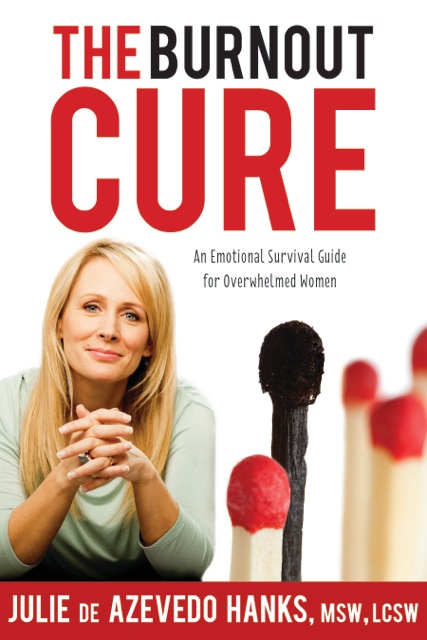
BurnoutCure_Front COVER

In our LifeSTAR program we emphasize self-care for both the men and the women as a way to fight addiction and heal trauma. Physical, emotional, and spiritual self-care are essential to help individuals get grounded and do the hard work of recovery. I’ve been reading a new book by therapist Julie de Azevedo Hanks called “The Burnout Cure“, which is basically a self-care manual for overwhelmed women. While it’s written specifically for an LDS audience and addresses some of the unrealistic cultural pressures faced by LDS women, the information in this book is a gold mine for anyone who wants to improve their self-care. I have really enjoyed reading this book and learning new ways to improve my own self-care.

I had a chance to interview Julie about her book and ask some questions that I felt were relevant to individuals involved in our program. Here is the interview:

1. Why should busy women make time to read this book?

Busy women should make time to read this book because we all need a reminder that our needs matter. It’s easy to get swept up in taking care of others and forgetting to tune in to our feelings and needs and to include ourselves in our circle of care. This book is interactive and filled with exercises to help you apply the concepts and make real changes in your life.

2. What do you say to women who believe they should be able to “do it all”?

First of all, I really dislike the word “should”. I want to encourage women to decide what they value most, what brings them joy, and prioritize those things. No one can “do it all” but we can do and have the things that we value most.

3. How can women tune out the unhealthy pressure of perfectionism?

I think it’s important to remember that perfection is a myth. No one can pressure you to be “perfect” without your consent. In one section of the book I talk about the importance of acknowledging our strengths while we’re working to improve ourselves and our lives.

One of the motivators of perfectionism is the belief that our worth is tied to our appearance or our performance - that if we are performing “well” or meeting our own or other’s expectations of us that our worth goes up, and conversely, if we aren’t being a “good mother” or a “good wife” or a “good neighbor” we are somehow less valuable. It’s just not true. Our worth is constant. Our behavior is separate from our worth, and fluctuates on any given day.

4. How can a crazy-busy woman start with self-care?

I encourage women to take just one small step toward taking better care of themselves. Pick one thing that brings you joy and prioritize it every day. Maybe it’s exercise, or reading, or napping, or painting, whatever it is build it into your life. I often use the analogy of the instructions given on airplanes regarding the oxygen mask.: “Place your mask on first, then assist others.” When our personal needs are met there is more of us to offer to our loved ones.

5. Do men need self-care as much as women? Why or why not?

Humans need emotional self-care. It’s our responsibility to make sure that our emotional needs are being met. One of the “cures” I discuss in the book is “take responsibility for your own happiness” and I believe this applies equally to men and women. Since women are often acutely tuned in to the needs of others, it’s easy to let their own needs get drowned out. Women are often socialized to be the primary caretakers, they tend to wrestle with guilt, more than men do, when it comes to identifying and caring their own personal needs.

If you want to pick up a copy of the book, click here. It’s a wonderful read and a much-needed resource in today’s high-pressure and fast-paced culture.

Making Self Care a Priority

Posted at August 1st, 2013
Posted by Geoff Steurer
Tags: - - - -
Categories: Pornography Addiction, self-care, Uncategorized
No Comments »

Making self-care a priority

By Jon Worlton, LCSW

LifeStar therapist


I recently listened to a prominent religious leader use the analogy of fly fishing when teaching about Satanic efforts to “hook” and destroy human lives. Fly fishermen carefully get to know the habits and patterns of their prey. They design lures to mimic insects that fish are eating and also fish at times when fish are most active and hungry. In short, fly fisherman learn about and manipulate their prey’s needs.

Whether or not one believes in God or the Devil, it is hard to disagree with the reality of “lures” in our environment that will limit our freedom and ultimately destroy our lives. Addictions are the most common lures that hook and trap individuals. Addictions are a powerful and effective way of soothing emotional distress and satisfying unmet needs. Even though the relief is temporary, the experience the user is having feels authentic. Unfortunately, the emotionally “hungrier” one is, the more enticing the lure of the addiction. On the flip side, the more our real emotional needs have been met, the easier it becomes to discern between an artificial lure and something that will be healthy and nourishing.

The first way to begin meeting these important emotional needs is the engage in healthy self-care. Self-care is the intentional practice of meeting our needs in healthy and nourishing ways. Early in my work with the LifeStar program, I heard recovery summarized as deliberately creating healthy rituals which nourish, strengthen, and renew our individual energy. This renewal allows us to make meaningful contributions to our relationships. It is important for all of us to deliberately identify and practice self-care activities.


A blogger named Stephanie Neilson (http://nieniedialogues.blogspot.com/2010/10/3-simple-steps.html) listed the following things she does for self care:


1. Make a “Quiet Time” sign and put it on my front door when I need a nap, or down time with the boys. There is no reason why quiet signs just have to be for napping children.?I suggest you take full advantage of it too.

2. I make home a priority. Nothing ever comes before my family time. Nothing.

3. I leave at least one day a week of nothing. No house-work, yard work, errands, shopping, computer, and cooking (among other things). Life just comes as it comes.


While these are examples specific to a stay-at-home mother of small children, you can clearly see the priority she places on protecting and caring for those areas that will allow her to be more emotionally present for her loved ones.

In addition to personal self-care, relational care is also critical. Todd Olson and Dan Gray, founders of the LifeStar program, suggest the following for relationship care:


  1. A weekly date with your spouse that doesn’t include recovery/addiction talk.
  2. Weekly service (do one deliberate thing each week for your spouse)
  3. A monthly gift to your spouse (doesn’t have to be expensive).

A New Years Resolution Reality Check

Posted at January 17th, 2013
Posted by Geoff Steurer
Tags: - -
Categories: self-care, St. George Utah Pornography Addiction Treatment
1 Comment »

By Geoff Steurer, MS, LMFT

Executive Director – LifeSTAR of St. George, UT


This is the time of year when most of us are going to be on our best behavior. We have a new calendar and, therefore, a clean slate to live the kind of life we wanted to live all of last year. And the year before. And the year before that.

I’d like to help you save yourself some mental anguish by suggesting a new way of looking at our obsession with New Year resolutions.

We live in a perfectionistic age where we believe we can look perfect, act perfect, and create perfection anywhere we want to. As a result, I see many of us either apologizing in shame that we haven’t been perfect at what we were trying to accomplish, or simply giving up in defeat.
Most people manage their lives in a perfectionistic culture by either going into an extreme “control mode” or “release mode.” Both are harmful and create unnecessary pain and misery.

Today, and for the next few weeks, we’re going to see a lot of “control mode” behavior. People will be signing up for the gym, paying attention to their eating, and trying to do their goals perfectly. This level of control is like winding up a rubber band tighter and tighter. Eventually, it’s going to snap.

After the “control mode” has snapped, “release mode” takes over and the tendency is to give up and either pick a new start date in the future or completely give up and assume their goal was silly and not realistic. Or, worse, they may assume something is wrong with them. That last one is most certainly not true.

Let me suggest a third approach.

This approach is simply making the commitment that you will keep trying, especially when you make mistakes. For some, this may sound like its giving people excuses to fail, but its actually reflecting reality.

Most of us have habits and patterns that are highly resistant to change, based on years of behavioral conditioning, family patterns, and self-limiting beliefs. These changes aren’t simply going to happen by creating a steely resolve to never mess up again at the beginning of a new calendar year, or month, or whatever magical date you pick.

Instead, change is going to happen when you decide you want to get well and then commit to pay attention your mistakes, use that information as a way to make adjustments in your efforts, and gradually improve until you have made real changes.

This approach takes real courage, where living in “control mode” and “release mode” is actually playing it safe where we don’t have to be vulnerable.

I love how Theodore Roosevelt put it in his famous quote called “The Man in the Arena”:

“It is not the critic who counts; not the man who points out how the strong man stumbles, or where the doer of deeds could have done them better. The credit belongs to the man who is actually in the arena, whose face is marred by dust and sweat and blood; who strives valiantly; who errs, who comes short again and again, because there is no effort without error and shortcoming; but who does actually strive to do the deeds; who knows great enthusiasms, the great devotions; who spends himself in a worthy cause; who at the best knows in the end the triumph of high achievement, and who at the worst, if he fails, at least fails while daring greatly, so that his place shall never be with those cold and timid souls who neither know victory nor defeat.”


So, get in the arena and commit to making some changes in your life. Don’t step out of the arena when you fail to do it perfectly or consistently. And, don’t wait to step in the arena until you believe you can do it perfectly. Step in and courageously begin making the changes you need to make in your life, for as long as it takes to make them.


Balanced recovery

Posted at April 16th, 2012
Posted by Geoff Steurer
Tags: - - -
Categories: Pornography Addiction, self-care, St. George Utah Pornography Addiction Treatment, Uncategorized
No Comments »

Geoff Steurer, LMFT, co-author of “Love You, Hate the Porn: Healing a Relationship Damaged by Virtual Infidelity” and founding director of LifeSTAR of St. George discusses how to create a balanced recovery. Healthy recovery from pornography and sexual addiction requires a healthy balance of education, therapy, group support, and self-care. Proper balance ensures that individuals and couples will have the ability to do long-term recovery.

Recovery Apps

Posted at January 17th, 2012
Posted by Geoff Steurer
Tags: - - - -
Categories: Partners of pornography addicts, Pornography Addiction, self-care, St. George Utah Pornography Addiction Treatment
No Comments »

Even though smartphones and tablet devices are capable of delivering harmful content, such as pornography, they can also arm recovering men, women, and couples with powerful tools to help them along in their journey.

We recognize that many individuals in early recovery choose to rid themselves of smartphones and tablet devices to reduce accessibility to pornography. This article in no way suggests that these apps (or the devices that run them) are necessary for successful recovery.

If you’re already using a smartphone or tablet, then we want to give you more tools and resources to help strengthen your efforts.

There are thousands of apps to help you enhance your recovery goals. Recovery categories can include: fitness, reading, healthy eating, money management, and so on. Here are a few of our favorites:

My Fitness Pal is a calorie tracking program that makes losing weight a lifestyle change instead of a passing fad. Using MyFitnessPal is very simple. Here’s how their basic process works: Based on your fitness profile, they will recommend a daily net calorie target for you to achieve your weight loss (or gain) goals. As you eat and exercise throughout the day, you need to log your meals and exercise in the Food and Exercise diaries. MyFitnessPal will calculate the number of calories you’ve consumed and burned from exercise and let you know how many calories you have left to eat for the day. If you stick within your calorie limits, you should achieve the weight loss you’re looking for. The best part of the system is that logging gets easier the more you do it. MyFitnessPal remembers the foods and exercises you like most and makes it easy for you to add those items to your diary. In just a few days, logging can be as fast as 30 seconds — it’s literally that easy. That’s it! Just a few minutes a day can show you so much about what you’re eating and how that impacts your health.


With Hazelden’s mobile applications, you’ll find the instant motivation you need to strengthen your recovery and inspire personal growth no matter where you are. From apps based on their best-selling books that feature special enhancements like texts and video messages from the authors to those based on their best-selling meditation books, Hazelden mobile applications are there when you need them most, at the touch of your fingertips. Some of their most popular apps include Brene Brown’s “Gifts of Imperfection”, their daily affirmation books for both men and women, and their day at a time series.


Dr. John Gottman is known as one of the preeminent researchers on marriage and family relationships. He has developed a series of apps to help strengthen marriages and families. Some of our favorites include: “Your Child’s Love Map“, “Fun and Play“, “Open-ended Questions“, and “I Feel.”

These applications are based on more than 30 years of research on strengthening marriages and families. Learning how to access the emotional world of yourself, your partner, and your children is one of the most satisfying parts of life!


There are several apps designed to help provide spiritual strength on a daily basis. There are apps for members of the LDS faith, Protestant faiths, and so on. Reading scriptures, sermons, and listening to sacred music has never been more convenient. Many individuals in recovery report that having regular access to these spiritual resources helps them get refocused on what’s most important in their lives.




S-Recovery helps you recover from sex addiction or porn addiction. This is an added tool to help you live your life without addictive sex or pornography. What’s more, S-Recovery was created by two therapists who specialize in treating sex and porn addiction. With S-Recovery, you can…
• Easily track your number of days in recovery, reminding yourself of your progress.
• Set recovery goals for yourself that are easy to record and track.
• Graphically see patterns and correlations between your healthy activities, your moods, emotions, and desire to engage in addictive or compulsive behavior.
• Learn how healthy activities improve your mood and decrease triggers.
• Set attainable goals.
• Stay in recovery by reminding yourself why you are doing it and what you have to lose.
• Allow technology to help with recovery, rather than making it more difficult.
• Help protect your confidentiality with password protection.
• Easily keep track of your recovery time and navigate to daily logs.
• Rate your mood and emotions daily. Also rate your acting-out risk level.
• S-Recovery’s Graph function enables you to see connections between your mood, emotions, and risk level over time.
•Enter a picture of someone who inspires you to be in recovery. Also enter names, goals, ideas of other inspirations.

The North Face® Trailhead App finds trails, hikes, bike routes and more based on your location. You can even search by activity and length. Whether you’ve selected an existing trip or started a new one, Trailhead tracks your route, distance, speed and elevation in real-time.
•Search from over 300,000 trails, hikes and bike routes.
•Find trips by activity, length and location
•Track your route with a real-time interactive map via GPS
•View your distance, speed, elevation and more

Dimensions of Self-Care

Posted at August 11th, 2011
Posted by Geoff Steurer
Categories: self-care, Uncategorized
No Comments »

by: Amy Cluff, LCSW

“To succeed, you need to take that gut feeling in what you believe and act on it with all of your heart.”
- Christy Borgeld

Self-care is an essential piece of recovery for addicts and their partners. Make a commitment today to take good care of yourself.

A good place to start is to choose 1-2 activities for each area of your life: Emotional, Spiritual, Physical, Relational, and Personal Development. You can choose from the examples below or journal your own self care activities. Decide how often you want to participate in the activity. If this is new to you, it is okay to start slow, and then add in more self-care as you feel ready. It is very helpful to write down your commitments to self care and to track your activities. You will feel the confidence and satisfaction that comes from taking care of yourself.

Emotional:
o Participate in your meetings, therapy, support groups
o Journal
o Use positive affirmations each day
o Identify and maintain your personal/ relational boundaries
o Identify and reach out to people who support you
o Practice mindfulness and reflective contemplation
o Value your accomplishments and progress
o Take some alone time for self care (be sure to communicate about it with your spouse and children, if needed)
o Develop and use a routine (again- start small if needed, such as a morning routine, or a night routine, or a spiritual routine)
o Use uplifting music, media (books, movies, television)
o Remember beautiful scenery
o Remember happy, peaceful past events
o Slow down life’s pace, take healthy breaks
o Share healthy touch (hugs, holding hands, arm around shoulders)
o Share intimacy with your spouse (if you are emotionally ready)
o Reach out and talk to some one if you are down, overwhelmed, or feeling ashamed
o Contemplate your purpose, goals
o Create an inviting atmosphere with lighting, music, and organization
o Take quiet time
o Dress up nice for yourself
o Think about your good qualities
o Think about the unique qualities, strengths of your gender
o Spend time with people who support you
o Ask for help if you need it. Take help if it is offered

Spiritual:
o Prayer
o Meditation
o Scripture or spiritual reading
o Attend church services and participate in religious ceremonies
o Repeating spiritual affirmations
o Serving others
o Journaling
o Listen to uplifting music
o Sing uplifting music

Physical:
o Use relaxation or breathing exercises for at least 5 minutes daily
o Stretch, practice yoga
o Exercise 3-6 times per week, for at least 30 minutes
o Take a long walk
o Set a time to go to bed and to wake, and get adequate sleep
o Spend at least 10 minutes outside daily
o Limit “screen time” of television, computers, gaming, and hand-helds to little or none. It is a good idea to set “no technology times” during the day, such as at meal times, and family time
o Keep a food journal
o Limit sugar and/ or fat intake
o Limit caffeine to little or no caffeine
o Limit alcohol to little or no alcohol
o Follow nutrition guidelines or diet plan
o Maintain your grooming, hygiene
o Soak in the bathtub
o Get a massage
o Repetitious movement, such as yoga, dance, jogging, swimming, needlepoint, doodling, crocheting, quilting, playing an instrument, weeding/ gardening

Relational:
o Share how you’re feeling with your spouse
o Practice check in routine with your spouse
o Spend time playing with children
o Go on a date
o Talk with some one you love, check in with them about how you are feeling
o Spend time with another adult, go on activities with other adults
o Consciously smile at others
o Consciously say something kind to others
o Limit complaining to little or none
o Limit gossip/ talking about others to little or none
o Simple acts of service
o Participate in a social group, such as choir, book club, class, play group
o Share family meals
o Attend religious services as a family
o Write a letter
o Play interactive games, cards, board games
o Play on a sports team
o Hold family meetings/ family check-ins
o Family activities
o Participate in family sports
o Group nature activities, such as hiking, bird watching, boating
o Go on a picnic
o Tell some one what you are specifically thankful for about them
o Do household chores as a family
o Sing, play music together
o Make a gift for some one

Personal:
o Work on your hobbies or start a new one (gardening, reading, art, music, cooking, needlework, sports, photos, mechanics, building, family history, etc.)
o Educate yourself individually or at a class
o Plan and maintain a budget
o Read uplifting book, articles, etc.
o Work on your projects or repairs (often stuff you’ve been procrastinating)
o Set mini goals for work/ school/ home
o Do a crafts, arts

Exercising and Eating Correctly for Life

Posted at February 11th, 2011
Posted by Geoff Steurer
Tags: - - -
Categories: self-care, St. George Utah Pornography Addiction Treatment
No Comments »

Kade Boyer, the owner and co-founder of CrossFit Dixie took some time to explain how we can get out of the “all or nothing” thinking common to those trying to stick with an exercise and nutrition plan. This is a great way to not only balance exercise and nutrition, but also other areas that require long-term change and commitment.

New Year’s Resolutions, Like Recovery, Take Commitment!

Posted at January 13th, 2011
Posted by Geoff Steurer
Tags: - -
Categories: Pornography Addiction, self-care, St. George Utah Pornography Addiction Treatment
No Comments »

By Sandi Burningham, LCP, CSAC
LifeSTAR Therapist

It is once again that unique time of year in which we have the opportunity to both review and reflect on the year past as well as to ponder and prepare for the year to come. In the focal point of this transition, many choose to set goals or resolutions for the year to come. In fact, for many of you, recovery may have even started in a fashion similar to this. While some see New Year’s resolutions as a set-up for failure or just some fly-by-night, fanciful thinking, others structure and utilize resolutions effectively to achieve the desires of their hearts. When structured and utilized effectively, resolutions have the potential to result in great and long-lasting rewards. Yet, as with so many other things in life, the level of reward and satisfaction associated with achieving resolutions is directly correlated to the level of commitment and effort invested.

Therefore, it might be helpful at this time to explore various levels of commitment as well as possible behavioral manifestations of each of the levels.

1. My life is fine the way it is, I don’t need to change anything, I have no goals.

2. There are things about my life that I would like to change but I have no motivation to set goals or make changes.

3. I’ll set goals and then try to make changes in my life.

4. I’ll set goals and then do my best to make changes in my life.

5. I’ll do whatever it takes to make changes in my life and achieve my goals.

As we all know, it takes at least a little effort to climb a set of stairs. Therefore, I would like you to envision a set of stairs as we now discuss each of the levels of commitment. As you approach the set of stairs and you stand firmly on the ground floor, you can see at the top of the stairs what it is you might possibly achieve. The ground floor is Level One of our five levels. At level one, an individual finds him/herself thinking, “I don’t want what is available and I am not willing to do anything about it.” At this level of commitment, or non-commitment the individual would not proceed further, would not invest any time nor energy and would remain on the ground level. At level one there is no acknowledgment of problems and there may even be a certain depth of denial related to one’s own life.

At Level Two, or the first step up, you can again see, and a little more clearly now, to the top of the stairs and you want what is available yet are not willing to do anything to achieve it. Individuals at this level of commitment find themselves from time to time thinking about what it is that they would like to change in their lives but what they want is never transformed to anything more than a thought or some random moments of contemplation.

Next comes level three, or the next step up the flight of stairs; at this level you think, “I’ll try.” This attitude and willingness often leads from random thoughts to random behaviors. For example, if you are wanting to achieve a healthier body weight, at this level of commitment, you would likely engage in occasional exercise and healthy eating. At level three your behaviors are likely to manifest only when it is most convenient. However, your attempts to try, might take you to the next level or step up where you are likely to experience an, “I’ll do my best,” attitude.

At a commitment level of four, you are likely to schedule time and reserve energy for specific efforts to assist in achieving your goals; you stick to your schedule in almost every case, even at times when it is less convenient than others. With persistence and practice you find that you are starting to experience some of the potential payoffs of what it is you are working toward. The experience with some success has the potential to drive you to work even harder.

The landing at the top of the stairs is now in plain sight and achieving what it is you have set out to do or gain, seems closer than ever. Reaching that landing and experiencing all that achieving your goals has to offer requires a steadfast belief that you will do whatever it takes in order to achieve your goals. Here, at level five, you explore all your options and find that you truly are willing to do whatever it takes even when “what it takes” is extremely difficult. At this level of commitment, it is not unusual to see individuals doing things such as making a job change, a change of residence, or a change of friends; true exploration of your goals and the means by which to get there may show you that some of your current lifestyle choices are standing in your way.

Another hallmark of level five commitment is that of making oneself accountable despite potential embarrassment. Human beings are more likely to maintain commitments when they know others, or at least one other person, is aware of what it is they are trying to achieve. Accountability means sharing with others what it is you are working on, what it is you want to achieve and then asking them to be active partners in keeping you accountable to your own goals. This is not to say that you need to shout your faults and weaknesses from the rooftops, however, confiding in some of those closest to you, will inevitably help you achieve your goals.

Let’s shift gears a little here, in an effort to address the fact that some of you may be reading this and thinking about the powerlessness associated with, and inherent in addiction. Due to the powerlessness that is experienced in addiction, some tend to think that goals, resolutions or commitments are a mute issue. However, the potential power and benefits of resolutions for addicts come in the form of structuring a lifestyle that is not conducive to addiction or addictive behaviors. For example, if you find yourself looking at pornography everyday on your lunch hour, your resolution for the year might be to meet someone (wife, co-worker, friend, sponsor) for lunch everyday. You can make yourself accountable for this resolution by explaining to whomever it is that you will be meeting why it is important to you to make this change in your schedule and how important it is to you that they help hold you accountable.

Additionally, according to Norman Doidge in his book “The Brain That Changes Itself” resolutions that require intense focus, concentration, the mastery of new skills and material naturally result in the use of the higher functions of the brain, thus moving one out of the more primal parts of the brain often associated with addiction. Therefore, some other examples of resolutions that have the potential to create a lifestyle not conducive to addiction might be: going back to school, learning a new language, making a career change, solving challenging puzzles, etc. You need to regularly engage in activities that engage the parts of your brain used for logic, reasoning and decision making. When making resolutions in an effort to overcome addiction, think outside the box; rather than thinking in terms of “I’m not going to look at pornography,” think in terms of, “I’m going to make myself accountable,” “I’m going to get the best possible treatment,” “I’m going to learn and new language or start a new hobby,” and/or “I’m going to make new friends.”

Benjamin Franklin once said, “Be at war with your vices, at peace with your neighbors and let each new year find you a better man.” In that spirit, may we each structure and utilize our new year’s resolutions such that the year finds us as better men and women. So here’s to hard work and the resulting rewards in 2011.