Aug 30, 2016

Posts Tagged ‘sexual addiction’

When the world crumbles

Posted at January 13th, 2015
Posted by Geoff Steurer
Tags: - - - - - - - -
Categories: Partners of pornography addicts, Pornography Addiction, St. George Utah Pornography Addiction Treatment
1 Comment »

originalWhen the World Crumbles
by Jill Call, LMFT

Trauma shakes the very foundation on which you’ve built your life. Trauma is defined as a life-threatening event and, with betrayal trauma, it threatens the life you’ve built together. Your world can start to crumble when suddenly you discover your partner isn’t someone you know anymore.

As women, we mostly define ourselves in relation to others. “I am a wife. I am a mother. I am a sister. I am a friend.” Because we define ourselves by our relationships with others, betrayal trauma can have life-altering effects.

For example, you might think to yourself, “If my partner isn’t who I thought he was, then the life we’ve built together may not be real, and what about me is true anymore?” Or perhaps this one, “I don’t know him anymore. I don’t know myself anymore. And I don’t know my life anymore.” You can see the life-changing implications of such thoughts.

Trauma causes a myriad of symptoms. If your life has been threatened by betrayal trauma, you may experience fear, racing heart, anxiety, hyper vigilance, depression, loss of appetite, increase in appetite, apathy, low tolerance threshold, anger, sadness, impatience, losing your temper, crying, shaking, and other effects. You may begin to examine your life and fear that anything familiar cannot be trusted. That is one of the effects of betrayal trauma. It’s an earthquake that shakes the very foundation of the life you’ve built and trusted.

When betrayal trauma shakes the foundation of your life you may start to wonder if everything you’ve built has been right. You may start to question or even reject parts of your life that have always been your solid ground. This starts to create a crisis of belief and further shakes your foundation. The lyrics to a song by Parachute describe this well, “and I lost my faith, in my darkest day.”

Your ability to stand on solid ground, and have a place from which to be steadfast, strong and stable is crucial to recovery. In LifeStar we talk about “resourcing” or “getting grounded.” This refers to the recovery skill of creating stability, peace, and emotional safety for yourself. This can be done by setting boundaries, by intentional self-care, or by mindfulness meditation. There are so many ways to find your center and put you back on solid ground. When you’ve lost yourself in this crumbling world of betrayal trauma, finding your solid ground is essential to your recovery.

I recently took a trip to visit the Hoover Dam, which is on the border between Arizona and Nevada. This massive structure was built in the 1930’s with over 5 million barrels of concrete (4.5 million cubic yards). Just to give you some perspective: that’s enough concrete to pave a 2-lane highway from Seattle, WA to Miami, FL. The engineers estimated it would take nearly 80 years for all of that concrete to cure completely. To me, it’s instructive that although the foundation for the Hoover Dam is solid and strong, it has been curing and becoming stronger over the last 80 years.

Establishing your solid ground in the midst of a crumbling world takes work, and sometimes a shift in perspective. When standing on the Hoover Dam marveling at it’s massive structure, it’s easy to become sidetracked and miss the whole purpose of the dam.

It was built to manage and harness the power of the Colorado River. Before the dam, the river would flood and dry up on its own unpredictable timetable. The towns along the river depended on it for their very life, and yet it could wreak havoc to their lives through torrential flood or dried up dirt. The river caused trauma to the lives of those who so desperately depended on it. The dam created safety by forming a reservoir.

Create your solid ground and your safety. Tend to your foundation. Recognize that not all the familiar parts of your life that you’ve counted on throughout the years have betrayed you. Turn around and see the reservoir of life you have created. What is in your reservoir? Is it strength? Hope? Good friends? Kindness? Faith? Trauma may have shaken your foundation but you are finding your solid ground. It is curing and becoming stronger and stronger. And you have a reservoir of life from which to draw your own peace, stability, and emotional safety.

Why your critics aren’t the ones who count

Posted at March 12th, 2014
Posted by Geoff Steurer
Tags: - - - - -
Categories: Pornography Addiction, St. George Utah Pornography Addiction Treatment
2 Comments »

)

Brene Brown has taught powerful truths about vulnerability and shame. In this presentation, she takes her message further by specifically addressing how to handle those who might criticize our efforts to create something new. People in recovery, both men and women, often hold back from taking risks to try new behaviors, such as sharing their feelings, interacting differently with loved ones, and other new behaviors.

Letting go of what is not ours

Posted at March 11th, 2014
Posted by Geoff Steurer
Tags: - - - - - - - -
Categories: Partners of pornography addicts, Pornography Addiction, St. George Utah Pornography Addiction Treatment
1 Comment »

worried-woman-couple-11091902by Jill Call, MS, LMFT
LifeStar of St. George, Utah

It’s been said that worry is like a rocking chair, it will give you something to do but doesn’t get you anywhere. Worrying, obsessing and controlling are illusions. They’re just tricks that we play on ourselves. We trick ourselves into thinking that by worrying, obsessing, and controlling we’re doing something to solve the problem. We’re tricking ourselves into using our time and energy in non-productive ways. Spouses of pornography addicts are at high risk for buying into the illusion of control and losing time and energy to worry and obsessing.

We need to let go of our worry and attempts at control.

Let’s consider a common example that spouses of pornography addicts experience. Cindy is afraid of her husband having a slip. She’s afraid of what that would mean for his recovery, and how devastated she would feel. In fact, she’s so afraid of this that she goes out of her way to make sure he doesn’t slip. She rarely lets him out of her sight, and tries to be with him during his every waking move. Even at night, if he shifts in his sleep, she’s awake and making sure that he’s still asleep. She regulates his computer usage, his cell phone usage, and his time in the bathroom. She even starts sneaking into a room where he’s alone to “catch” him in the act. She’s giving herself an ulcer.

Can you relate to her fear? Maybe she’s afraid that he won’t manage his behavior as well as her. Perhaps she’s afraid of how much it will hurt to sit back and let him manage it and risk making mistakes trying to figure it out. Her actions are damaging her and sending a message to her husband that she doesn’t believe he can handle himself..

The truth is: she will never be able to prevent him from choosing his behavior. He will always have that ability, despite her illusion of control. The perceived control she takes to manage his behavior is an illusion. The truth is it’s not hers to worry about, obsess over, or try to control.

Also, how much is her husband accountable for his behavior in this scenario? How much is he learning about his own triggers, or pain, or self-management? His wife is stepping into his realm of learning and taking away all the important lessons. Sadly, her good intentions to help in recovery actually prevent him from learning the lessons that will enable him to stay in solid recovery.

And finally, how much agony is this poor woman in? There’s so much fear and worry. Unfortunately, she’s unwittingly added agony to this by trying to control what is not hers to control.

We must learn to let go of what is not ours.

Letting go of worry and your attempts at managing your spouse doesn’t mean you’re giving up. It means you’re learning how to love and care without making yourself sick with worry. If you allow your partner to manage his own behaviors and choices, you’re giving back to him his responsibility and accountability so he can grow. By doing this, you’re allowing your partner to take accountability for his actions and for the consequences that follow. You’re also allowing him to learn to connect to you instead of you doing everything possible to prevent him from disconnecting from you and the relationship by acting out.

Since you’re connected, the consequences of your partner’s actions will affect you. The woman in the scenario above was managing her husband’s behavior because the fear of losing her connection to him and being alone overwhelms her. If he has a slip, it signals to her that he is moving away from her which will naturally trigger more fear, pain, and sadness. She wants to manage him as a way to protect herself from being alone. But for all her worry and attempts to control, if he slips, does it ultimately hurt her any less?

If you’re giving back accountability to your husband, he is also held more accountable for how his actions affect you. Worrying about how to protect yourself from the pain of his slip is like walking around with an umbrella waiting for it to rain. While it might “rain” frequently in your relationship, walking around with an umbrella open just waiting for the rain blocks out any blue sky that might be there.

Certainly you have a right to safety and shelter. So, if there’s rain, get your umbrella. If storm clouds are gathering, get your umbrella. But hovering sheltered under your umbrella all day and night from fear of the rain robs you of the chance to have peace during good weather.

Here are a few suggestions to help you give accountability back to your husband:

  1. Acknowledge to him that you recognize how afraid you’ve been that he won’t do his own recovery work and tell him you’re going to work on allowing him to do his own work.
  2. Open up to your support system and your group that you’re going to be accountable for the times when you become fearful and begin to take over your husband’s recovery efforts.
  3. Try sharing the fear underneath the controlling behaviors so you can let your husband and your support system know how important it is for you to feel safe and connected.

There is peace and assurance and proper accountability in letting your partner own what is his. You will free yourself from the burden of doing all of the work to guarantee that you won’t lose your connection to your partner. Letting go of what is not yours will bring you more peace and make it easier to believe your partner’s own efforts at connecting with you.


13 myths about pornography addiction

Posted at January 14th, 2014
Posted by Geoff Steurer
Tags: - - - - - - - -
Categories: Pornography Addiction, St. George Utah Pornography Addiction Treatment
2 Comments »
by Brannon Patrick
LifeStar Lehi

2013-26673-28-300x2141. Sexual addiction shouldn’t be treated like a real addiction.

Compulsive pornography use has all the elements of an addiction. The rate and duration increase over time. People use it to numb out pain or medicate their emotions. It causes disconnection, denial and trauma in relationships.

2. If you’re active in church you’re less likely to have a problem with pornography.

That’s not the case at all. Utah’s population is more than 60 percent Latter-day Saint and it has the some of the highest pornography subscription rates in the country. I have several theories on that, one of which is that our culture is sadly shame-based. Shame is the driving force behind addiction.

3. When people get married, their pornography addictions will stop.

This isn’t true, because pornography addiction, which is a form of sexual addiction, isn’t about healthy sex. It’s not about an intimate relationship. Sex doesn’t fulfill the lustful hit a person gets from pornography. This misconception leads to other misconceptions as well, like partners of addicts believing they can have sex more to the control their spouse’s addiction.

4. Feeling enough shame about an addiction will cause someone to seek help.

Feeling shame will cause you to hide, to go into secrecy. You’re not going to be driven to confront a problem if you have a lot of shame. Guilt is slightly different, if it’s healthy guilt. Knowing you’ve done something wrong could lead someone to treatment, but most often, it’s just pain and tough consequences that bring people to my office.

5. If the addict wants it enough, God will always take away their addiction.

I believe that God can do this, but I don’t believe that God often does. Many people desperately want to overcome their addictions, but still continue to struggle. I don’t see many miracles in the sense of people being cured simply because they have an experience with God. What I do see is that whoever gets into recovery has to have God involved to progress. Addicts use the 12-Step program and learn how to surrender to a “higher power.” God is there to help them walk the path of overcoming their addiction.

6. Sobriety is recovery.

Being sober is not enough. Recovery is a lifestyle change. It’s being transparent. It’s overcoming shame. It’s being humble and honest. Sobriety is a byproduct of recovery.

7. Compulsive pornography use only affects the user.

It’s like any addiction. It’s an attachment disorder, meaning if affects relationships. In order for someone to be addicted, they need to be in some denial, which prevents them from being authentic. It causes trauma for parents, children, spouses and all kinds of family relationships. It definitely doesn’t just affect the user.

8. Spouses of addicts should just forgive and forget. It’s not that big a deal.

Spouses are truly traumatized by their partners’ addictions in ways they might not even realize. They need to learn how to cope. They need their own recovery plan and support system.

9. Every ecclesiastical leader will know how best to help a pornography addict.

You may get the help you need from your ecclesiastical leader alone. You may not. Often well-meaning ecclesiastical leaders are untrained in dealing with this issue and are subject to many of the same misconceptions as the general population. In an effort to be helpful, sometimes religious leaders say things that unknowingly undermine the spouse as well as the person struggling with the addiction.

10. Once you’ve stopped compulsively viewing pornography and repented, you’re in the clear. The problem won’t resurface.

This is a common misconception that leads to so many more, like “If I’ve repented, I don’t need to tell my future spouse about it because I’m done.” Addiction is a disease and it’s a lifelong disease. It’s not just a moral issue. Even after repentance, you still have to work your recovery to stay sober or you’ll fall back into addiction.

11. My teenager probably hasn’t been exposed to pornography.

If you believe that, you’re most likely in denial. It’s everywhere. Almost every teenager has been exposed to pornography in some way. Parents who don’t accept it are hurting their children. Children need them to talk openly about what they might feel, what they should do and whom they should talk to when it happens.

12. Discussing pornography with a prepubescent child is unnecessary.

Exposure to pornography is happening at younger and younger ages. If they’re old enough to view it, they’re old enough to talk about it. The game has changed. The talk needs to start sooner and happen more often. Either children will learn about sex and pornography from friends at school or from their parents. It’s better to get to them first before they learn elsewhere.

13. Viewing pornography is only a problem among men.

Pornography use is increasing in all forms. It’s not just a male problem. I hear that more and more women are involved with it, but I don’t see more and more women in my practice. My theory on that is that it’s even more culturally shameful for women who have a problem, so they’re even less likely than men to come out about it.


Recovery myths dispelled

Posted at November 18th, 2013
Posted by Geoff Steurer
Tags: - - - - -
Categories: Partners of pornography addicts, Pornography Addiction, St. George Utah Pornography Addiction Treatment
1 Comment »

Couple-Talking019

Myths Dispelled
by Shay
awiferedeemed.blogspot.com

On January 2, 2013, a four hour conversation with my husband changed my life forever. I knew within the first 10 minutes that our marriage hung by a thread and whether or not we made it, was primarily up to him. That was the night that it became clear that my husband’s “porn problem” was actually an addiction.

For us, the diagnosis of addiction also brought us direction and resources. For the first time in our 16 years of marriage, we realized that the years of madness and Insanity actually showed cycles and patterns. In the months that followed, we isolated ourselves in a world of recovery and spent every spare second of our days reading books, blogs and forums. We found therapists, 12 step groups and group therapies. We learned that this addiction has very little to do with pornography and everything to do with Internalized Shame. As my husband dove into his recovery, I dove into my own. I learned that the wife of a pornography or sex addict, experiences Betrayal Trauma. Betrayal Trauma is often misdiagnosed as Codependency. It causes the wife to feel crazy, insane and out of control. The emotions and symptoms are very similar to PTSD. The wife of a pornography addict usually feels with the same intensity triggers, fears and trauma, as does a soldier returning home from war.

I realized early on that recovering from this deep and intense trauma was not something I could do alone. I needed help. I began to reach out. I started with a friend. Then I turned to my sister. Next was my dad and after that was a woman from one of my support groups. One by one I built my network of support, always be prayerful and cautious about who could be trusted. Today my network is extensive and each one plays a vital role in helping me receive what I need to recover.

As I have reached out and depended on the people around me who love me for support, I have come to understand that just as I needed information and education about the nature and effects of this addiction so do they. The people around me love me and hurt when they see me hurting, but sometimes because they do not understand the delicate nature of the circumstances, the advice they offer can be damaging, harmful and even traumatizing. Well intentioned clergy, therapists, family and friends, in an effort to help, using their best, but uneducated judgment offered advice that was not in the best interest of my recovery or my husband’s.

Recently, I received some of this bad advice. Due to the nature of the source and circumstances, it was intensely traumatizing to me. It sent me into a downward spiral that I had to fight tooth and nail to climb out of. As I pulled myself out of the Insanity that held me captive, I turned to my support. As a result of my recovery efforts, my network of other recovering spouses (often termed WoPAs for Wives of Porn Addicts) has become extensive. Their examples of similar experiences were validating to me, yet at the same time utterly shocking. I came to realize after surveying these brave women, that we are sometimes taught and advised on the same myths. Over and over this incorrect and often traumatizing advice was given to us as factual. You can paint a donkey and present it as a zebra, but it will in fact, always be a donkey.

I would like to dispel some of the most commonly advised myths that are given when sexual/pornography addiction is present.

1. You should protect your wife/yourself from the more damaging details and effects of the addiction.

“I’m not sure that she needs to know all of the serious details, it would just hurt her.”

“Maybe you shouldn’t tell her everything.”

“You don’t really want to know all of the details. It would be too painful.”

Often times the wife is treated with kid gloves and given the impression that she is weak and fragile. As if too much information may be irreparably damaging to her. Maybe a wife shouldn’t know every detail, but that is her place to decide that. Not her clergy, not her family or friends and it is certainly not her husband’s decision. No one knows her strength and capability better than she does. Listen to the advice you are given, feel it out in your heart and make the choice that is best for you. When deciding how much information you need, one therapist recommended asking yourself, “How would knowing this information help me heal?” And if you choose to leave out details or receive less information, which many women do, that does not make you weak or fragile, it makes you self aware. Self awareness is strength.

2. The spouse’s job is to be forgiving and be a support to her husband.

“You need to put this behind you.”

“It is ideal for the wife to be the husband’s main support person.”

“You need to forgive and forget.”

The spouse’s job is to heal from the trauma inflicted upon her first and foremost. She should never at any time sacrifice her own recovery for the recovery of her husband. She should not be pushed or pressured into forgiving him too quickly but rather should be open to allowing it to happen as she turns to the Lord to heal her. Forgiveness is a gift she gives to herself, not her husband and should sometimes be reserved for after some healing has taken place. There is no ideal or main way to heal, there is only the right way for you. You should never feel pressured to do anything that doesn’t feel right to you. If you do not feel like it is in the best interest of your healing to be your husband’s main support person, and many women feel it is not in their best interest, then that is the right answer for you and not a reflection of your lack of recovery. It is a reflection in the strength of your self awareness.

3. You need to keep the secret.

“You shouldn’t tell your friend/clergy/family member. That would betray your husband’s confidence.”

“It’s his secret, you don’t have the right to share it.”

“Telling people would shame the family.”

“We keep these things ‘in house’”.

When your husband brought addiction into your marriage, he made it your secret too. And that secret brought pain and trauma into your life. Trauma that can be healed from. But, it is a burden so intense and deep that it is usually unmanageable when tried to handle alone. We don’t have to suffer in silence and isolation. There are forums and support groups, blogs and group therapies filled with women who are supporting each other as they heal from this trial. Reach out and allow others to support you and help you heal. My life is filled with strong, loving, capable people who love me and I would be foolish and judgmental to think that they can’t be trusted with this trial in my life. That doesn’t mean that I should tell everyone I meet but it does mean that the Lord will place the people in my path that can be the most support to me and He will tell me who they are if I but ask Him. A safe person is non judgmental, respectful and won’t betray your trust. Ask the Lord who is safe for you.

4. Your response to his addiction is an over reaction.

“All guys do this.”

“Why are you so upset about this?”

“Its just porn (or masturbation or news websites). It only happens every few months.”

“You are over reacting.”

It doesn’t matter if it was once every few years or every day, the effect is the same- Deep Trauma. Diagnosable Trauma. The pain is so intense because when you chose to marry, you were on even playing fields, but the moment he chose to allow addiction into your life and marriage and hide it from you, you lost that even playing field. He had the upper hand and he hid that upper hand from you. There is nothing that you can do to even the playing fields. Nothing. It is all up to him and whether or not he chooses recovery and that reality is terrifying. It is traumatizing. So, the month you spent on the bathroom floor is normal. The showers you took, fully dressed, so your kids wouldn’t hear you cry? Normal. The time you freaked out in the grocery store and had a panic attack because the other women in the aisle was showing major cleavage? Normal. Your inability to watch regular TV without crying? Normal. Obsessively checking computer histories? Normal. Crying through church? Normal. It is all normal and a result of your Betrayal Trauma. It is what you actually feel and that is not an over reaction. One therapist said, “You are not crazy, you were betrayed. Your feelings are valid.”

5. Sex will solve the “problem”.

“You need to have more/better/more intimate sex with your husband so that he doesn’t need to look at porn.”

This was the most commonly advised myth by far. We are physiologically designed to crave a loving, emotionally, intimate connection but an addict in his addiction doesn’t crave this kind of love or true connection, he craves lust. Advising a wife of a pornography/sex addict to have more sex with their spouse to try to help with his addiction is like advising the wife of an alcoholic to drink more wine with her husband to help him get better.

Some think that porn addictions will just stop with marriage and the ability to have sex, but this is also a myth. Having a pornography addiction has absolutely nothing to do with the frequency or spiciness of sex. More/better lingerie or creativity in the bedroom won’t work. This addiction will never be solved with lust filled sex, and unfortunately, lust-driven sex is usually all the addict knows.

Sexual addiction is an emotional and intimate connection disorder and throwing more UNHEALTHY sex at it won’t solve anything. Lust is only about physical appetite, where love/true marital intimacy is a whole-self (mental, emotional, spiritual, physical) connection. The addict has to start back at the beginning and learn how to have true connection and emotional intimacy, and then physical intimacy when both partners feel things are healthy and safe.

Telling the wife to have more/better/spicier sex will only put the blame and responsibility on her, which will cause deeper trauma. The wife didn’t cause this problem and she can’t fix it.

If any of these myths sound familiar to you and cause you to recognize that addiction is in your life, I plead with you to reach out. If you have been given advice that feels off to you, trust yourself. There is a huge community of women that are healing by learning from and leaning on each other. You are not alone. You are SO NOT ALONE. Come and be a part of us and heal.

And if you are placed in a position where you are the support person to such a tender heart, before you offer advice, please do some research. Pornography addiction is a plague that is sweeping the globe and ripping the hearts and souls out of our marriages and families. It is unlike anything we have ever seen and will never be solved or fixed by the ways of the world. Help us heal by learning about the true nature of this addiction and the rippling effects that is causes. Together we can overcome this. Together we are strong.

To read more from Shay go to awiferedeemed.blogspot.com


Protecting Children and Families from Pornography

Posted at November 14th, 2013
Posted by Geoff Steurer
Tags: - - - - -
Categories: Protecting Children from Pornography, Protecting Families from Pornography, St. George Utah Pornography Addiction Treatment
1 Comment »


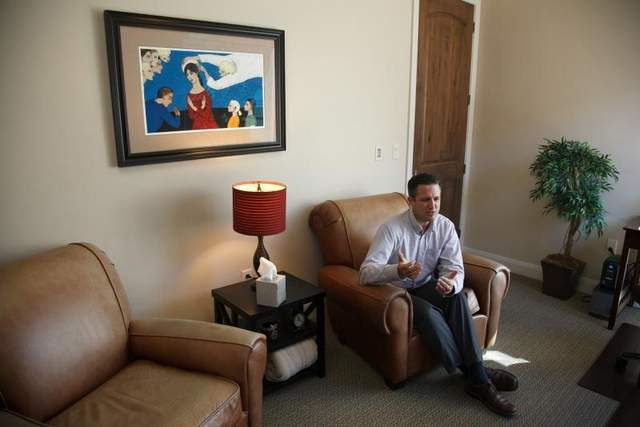
steurer office

Shedding Light on Pornography Addiction
by Lisa Larson
The St. George Spectrum
November 13, 2013

It’s a vice that was once limited to back alleys, adult stores and shady parts of town; an addiction that required a little bit of effort to pursue.

Now it’s available no matter where you are, regardless of your age — all you have to do is click the mouse, type a keyword or follow a link and pornography is instantly on your screen.

Despite its pervasiveness, pornography is a topic of discussion that is still very much taboo in some circles. The Utah Coalition Against Pornography plans to address this aspect of the issue at this weekend’s regional conference titled Protecting Children and Families from Pornography.

“Every parent who has children in their home and an Internet connection needs to be at this conference,” said Geoff Steurer, a licensed marriage and family therapist who is involved in putting on the conference. “You say the word ‘pornography’ and everyone wants to be as far away from it as possible, (but) we want parents to be empowered and armed with good information.” … read the rest of the article

Six people who don’t need to hear your shame story

Posted at November 8th, 2013
Posted by Geoff Steurer
Tags: - - -
Categories: Pornography Addiction, St. George Utah Pornography Addiction Treatment
No Comments »

While I’m not a huge fan of Oprah, I do think Brene Brown has some points worth considering. She does a great job explaining what kinds of people with whom we should share our “shame story.” We all have shame and we have all done things we are terrified to share with others (however big or small). I agree with Brene that we should be careful who we tell. As she has said previously, telling the wrong person can turn them into a piece of flying debris in our already swirling tornado. It’s critical that men and women in recovery talk openly with safe people about their struggles. It’s even more critical that they carefully choose who they tell. Recovery is hard enough when you have good support. Trying to recovery while managing the poor boundaries of others is even harder.

When something shameful happens in your life, shame and vulnerability researcher Dr. Brené Brown says, there are six types of people with whom you shouldn’t share the story. Watch to find out who they are. Plus, hear why she says everyone needs just one “move-the-body friend.”

Rebuilding Trust After Sexual Betrayal

Posted at October 26th, 2013
Posted by Geoff Steurer
Tags: - - - - - - - - -
Categories: Couples Pornography Addiction Recovery, Partners of pornography addicts, Pornography Addiction, St. George Utah Pornography Addiction Treatment
3 Comments »

math-pic8by Geoff Steurer, MS, LMFT
Founder and Director
LifeStar of St. George, UT

I regularly meet with men who tell me they have given up pornography and sexual acting for good and have no intentions of going back. They share how they’ve moved from darkness to light. They talk about the mighty change in their heart. I have no doubt they’re experiencing changes in their thoughts, feelings, and intentions.

However, their wives are full of doubt.

One minute he admits to having a secret life filled with sexual behaviors and the next minute he tells her he’s healed and never going back to that life. She’s wondering what happened in-between those two very distant points on the continuum.

This scenario reminds me of when I was in school doing math problems and trying convince my math teacher that I really did know the answer to the math problem, even though I wasn’t showing my work on paper. For all she knew, I was looking up the answer in the back of the book or using a calculator. No matter how hard I tried to convince her I knew how to do algebra, she wanted to see my work.

A betrayed wife needs to know how her husband moved from a life of secrets and addiction to a life of integrity. She wants to see evidence of his journey. This is critical so she can trust what she sees in front of her.

Not only does she need to see his work, but he also needs to know he can do the work. I believe in miracles and I believe that the change of heart is the first miracle that gives a man the power to face his story and make the necessary physical, emotional, spiritual, sexual, and relational changes necessary for long-term recovery. However, I don’t believe that one change of heart is enough to sustain any man in long-term recovery without him doing additional work.

Since there are no shortcuts with true recovery, showing how he went from addiction to recovery shouldn’t be difficult if he’s really doing the work. If he can’t show his work, then he’s not doing the work.

He can show his work by reaching out and opening up about his process. He can talk about what he’s learning in therapy, group therapy, 12-step meetings, his readings, and meetings with his church leader. He can show his work by interacting differently with his wife, children, and family members. His priorities will change as he spends less time in front of the TV or computer and more time in healthy living. If things look and feel the same as they did when he was active in his addiction, even though he says he’s changed, he’s not going to convince anyone until he can show his work.

Like a good math teacher, a good recovery program will help a man break down his recovery into manageable steps so he can know what he’s doing, how he’s doing it, and how to maintain it for life. He’ll also learn how to reach out to his wife and other supports to show his work. Recovery is not a mystery. It’s possible because of measurable steps taken every day to build a life of integrity and connection.


Fighting Against Pornography- Part 2

Posted at August 1st, 2013
Posted by Geoff Steurer
Tags: - - - - - - - - - -
Categories: Couples Pornography Addiction Recovery, General Sexual Addiction, In the news/media, Partners of pornography addicts, Pornography Addiction, Protecting Children from Pornography, Shame, St. George Utah Pornography Addiction Treatment
2 Comments »

Editor’s note: The following story deals with sexually-themed subject matter that will not be appropriate for some readers. Discretion is advised.

This is part two in a four-part series. Read part one: “Ubiquitous assailant: The dangerous unasked questions surrounding pornography“. Read part 3: “Why laws to fight pornography aren’t being used.” Read part four: “How couples break the cycle of addiction.”

NEW YORK — The keys jingled in her hand as Lili Bee walked up the steps to her apartment. The New York air was warm and the trees along her street were finally showing traces of spring.

“Hello!” Lili called out as she shut the front door behind her, not wanting to startle her cleaning lady, who was in the master bedroom.

“Here, I want to show you how I organized the walk-in closet,” the woman said, motioning Lili to follow. “Here’s his tennis racquets, his record collection, his hammers, tools.”

The woman then grabbed a garbage bag and handed it to Lili.

“And here’s his pornography collection,” she said casually, turning toward the next shelf.

Lili was stunned. She had no idea the man she considered her soul mate viewed pornography. In fact, each time they walked by an adult video store in Manhattan he shook his head in disgust.

In that moment she felt betrayed, and sick to her stomach. She ran to the bathroom.

“Oh honey, you shouldn’t be upset by that, all guys do that,” her cleaning lady called through the door. “Some of us even do that.”

Even years later, Lili can still remember the sinking feeling that her boyfriend was living what felt like a double life.

Lili wasn’t alone in feeling betrayed. In a 2003 survey published in the Journal of Sex and Marital Therapy, of 100 women surveyed, 26 percent said they considered viewing pornography on par with adultery, while 39 percent said it negatively impacted their relationship. Nearly half said habitual viewing of pornography by their partner made them feel insecure.

“People aren’t aware of how extremely harmful (pornography) can be,” says Wendy Maltz, psychotherapist and co-author of “The Porn Trap: The Essential Guide to Overcoming Problems Caused by Pornography.” “We’ve allowed this product that shows sex in a particular way and trains sexual arousal patterns in ways that can limit positive sexual expression. People are developing a sexual relationship with it that is superseding human relationships.”

Maltz and a growing number of scholars and therapists are becoming concerned about the effects of pornography on relationships, the way it commercializes sex and normalizes violence under the guise of fantasy.

“If there’s one thing that enrages me it’s people downplaying this,” Lili said. “That makes me so angry. There’s a world of pain out there around this, and if we keep sticking our head in the sand it will grow until it blows up in our face. As far as I’m concerned, it already is blowing up in our face.”

The dangers of commercializing sex

Jan Meza walked up the stairs already drunk, her stomach in knots, despite the variety of pills she’d been given that morning to help her relax.

As a prostitute-turned-porn-star working in California’s San Fernando Valley, her normal scenes involved one or two men. But this morning in 2006, 25 men would have sex with her.

She agreed because the paycheck would be $5,000 for an hour. It would pay the rent and keep food on the table for her three young children back home with grandma, who thought she was in California doing plus-sized modeling.

The director promised to stop if she was in pain, and vowed no one would call her bad names.

But they did, and he didn’t stop filming even when she began crying. During the scene, the pain was so intense she actually blacked out several times — images that had to be cut from the final film.

After the scene and publicity photos the men wanted to take with her, she ran from the room to the bathroom, where she stood in the shower crying and vomiting.

The producer came up minutes later and raved about her performance.

“ ‘Great job, we definitely want to do more scenes,’ ” she remembers him saying. “He didn’t care … about the kind of wreck I’m in. It’s just, here’s a pat on the back, and extra money and ‘What do you need for next time?’ ”

When the video finally came out, it was edited to make it look like Meza was enjoying the experience.

And that, in a nutshell, is one of the biggest problems with pornography, says Rachel Collins, a youth minister who has spent the last nine years building relationships with women in the industry and helping them get out.

The entire industry is all just a façade, she says, a parade of carefully edited images and manipulated encounters that are sold as authentic and enviable — all while ignoring the pain of performers.

Over nine years as a producer of pornographic films, Donny Pauling recruited more than 500 women. None of the women have ever thanked him after they started in the industry, even though they could make nearly $500 in a few hours performing a soft-core scene (Pauling left the industry in 2006 and now speaks out against it).

“I couldn’t think of anything unsexier (than porn),” says Collins. “Sex is made to be between two people in a committed relationship who love each other. There’s so much to it that’s so beautiful and intimate, and when you make everything about an orgasm, what a cheap and fake reality.”

But the industry thrives on selling this reality — scripted and manipulated though it may be.

“These are men who can do it without any kind of mental involvement,” says Bill Margold, a porn actor who is also the adult entertainment industry historian and unofficial spokesman. “… The best men in this business are men who are having sex with themselves, not the person they’re with. You have to become detached when you’re performing.”

And while that may make for a good production scene, experts say it makes for a terrible behavioral model, especially for young people who have no other ideas about sex.

“The pornographic model of sex (is) limiting, rather than expanding, our concept of what sex is and can be,” says Meagan Tyler, a lecturer in sociology at Victoria University in Melbourne, Australia, and author of “Selling Sex Short: The Pornographic and Sexological Construction of Women’s Sexuality in the West.”

Tyler, a non-religious feminist, says society has accepted sex as a commodity that can be bought and sold, viewed upon demand and twisted into every imaginable fetish.

“Every time I speak about the harms of pornography, I get asked about the possibilities of ‘better porn’ or ‘ethical porn,’ ” Tyler said. “What it shows me is how desperate we are … to believe that porn use is fine. What I ask is that people try and think about what sexuality would be like without porn. If you have difficultly imagining what that would be like, then we all have a problem.”

Numb to violence

One of the most distressing studies during Robert Wosnitzer’s doctoral research in media culture and communication at New York University was a content analysis of 304 scenes from the 50 most popular porn movies of 2005.

In 88 percent of scenes, performers were slapped, spanked, gagged, choked, kicked or had their hair pulled. Insults and name-calling were present in almost half of the scenes.

Almost all (94 percent) of the violence was directed to women, who responded nearly overwhelmingly with pleasurable or neutral expressions.

“Viewers of pornography are learning that aggression during a sexual encounter is pleasure-enhancing for both men and women,” Wosnitzer, Dr. Ana Bridges and their co-researchers wrote in their paper published in Violence Against Women in 2010. “What (is) the social implication for this type of learning?”

In college fraternities, that fusing is seen as men who consume pornography — specifically rape and sadomasochistic types — report higher levels of willingness to rape women if they wouldn’t get caught or punished, and lower willingness and perceived ability to intervene in a sexual assault situation, according to research by Oklahoma State University education professor John Foubert.

Such results undermine the argument that pornography is a personal choice and what happens in private doesn’t affect anyone else, he says.

“Most of the culture today thinks that pornography is fine, that it’s an acceptable part of human sexuality with no consequences beyond the individuals who are using it,” Foubert said. “Users don’t think about … what scripts play out in the porn they’re watching and how that might affect their attitudes toward others.”

Foubert and others argue pornography is changing expectations of normal sexual behavior in non-coercive settings, meaning that even though women aren’t being raped or assaulted as often, they’re being asked and pressured by boyfriends to engage in pornographic-modeled behaviors.

Five Swedish studies of youths found that young men and women who frequently look at pornography are more likely to have had anal intercourse, and that boys who watch pornography are more likely to have experimented with acts they saw on screen, according to a review by Michael Flood at the Australian Research Centre in Sex, Health and Society.

But saying that someone who watches something in a movie will immediately behave that way is like saying that “if James Bond drives a car really fast, people will drive faster as a consequence,” says Hugo Schwyzer, author and professor of history and gender studies at Pasadena City College. “This is a fantasy you’re dealing with in pornography. It’s not the way the rest of the world works. As human beings, we’re capable of distinguishing from what arouses us to what the world is supposed to be.”

But it’s hard to make those distinctions when so much of mainstream pornography is fixated on stereotypical themes of dominance, aggression and power, usually perpetrated by white males on an array of ethnically diverse women, says Wosnitzer.

“The mainstream industrially produced porn from San Fernando … allows a mostly white male audience to see itself with all of its power and privilege attached to it,” he says, “and that women are objects, for (their) own pleasure.”

Broken relationships

While polls show Americans are divided over whether pornography is bad for relationships, anecdotal evidence is beginning to pile up that it’s bad for marriages. In a 2002 survey of 350 members of the American Academy of Matrimonial Lawyers, 62 percent said the Internet was a “significant factor” in divorce cases they had handled the last year.

The most-cited problems included meeting a new love interest (68 percent) and obsessive interest in pornographic sites (56 percent).

In 2009, 79 percent of lawyers from the same group said that over the previous five years, Internet browser histories, which typically included visits to pornographic websites, were being entered as evidence in divorce cases.

“We’re going to have a whole generation of people whose intimacy is through a computer screen,” said AAML president Kenneth Altshuler. “Which is much more of a problem than viewing pornography online. It’s more that their entire relationship is online, and they cannot even connect to human beings unless they’re on a computer.”

It’s just another way that pornography is promoting “a sexual dumbing down of the culture,” says Maltz.

Yet Maltz said she’s encouraged by the growing number of couples in her practice who realize that “porn is futile and is actually harmful.” So instead of using it, they develop “new approaches to sex that involve being emotionally connected and present with their partner, because it’s just naturally more fulfilling.”

But Lili never got that chance.

After two years of supporting her partner through sex-addiction therapy, couples counseling and recovery meetings, he finally confessed he never quit viewing pornography, and his addiction had even gotten worse. Lili kicked him out of the house and focused on her own healing.

It was a long journey, made worse by the fact that her partner’s stash of pornography was solely women, a “digital harem,” that he watched, arranged and organized for hours and hours each week, yet never had time or interest in being intimate with her anymore, she said.

“I could never get it out of my head that I wasn’t his ‘real choice,’ ” Lili said. “I was someone he was settling for. And how could I ever feel OK about the impending aging process when I knew my partner was bonding (through orgasm) to girls who were teenagers, girls decades younger than myself? I began to go to war with myself, to hate every gray hair that sprouted, every tiny line on my face, every freckle on my body.”

Today, she shares what she’s learned through her website, PoSARC.com — Partners of Sex Addicts Resource Center — and through her work as an interfaith minister and a counselor to partners of sex addicts.

“We all (think) that if we were sexy enough, sweet enough, cared enough about the man, all of this wouldn’t happen,” Lili says. “Nothing could be further from the truth.”

Fighting Against Pornography- Part 3

Posted at August 1st, 2013
Posted by Geoff Steurer
Tags: - - - - - - - - -
Categories: Couples Pornography Addiction Recovery, General Sexual Addiction, In the news/media, Partners of pornography addicts, Pornography Addiction, Protecting Children from Pornography, Protecting Families from Pornography, Shame, St. George Utah Pornography Addiction Treatment, Uncategorized
No Comments »

Editor’s note: The following story deals with sexually-themed subject matter that will not be appropriate for some readers. Discretion is advised.

This is part three in a four-part series. Read part one: “Ubiquitous assailant: The dangerous unasked questions surrounding pornography.” Read part two: “Second-hand porn: the spreading circle of damage.” Read part four: “How couples break the cycle of addiction.”

As she flips through the sex offense cases for the Metropolitan Police in Reykjavik, Iceland, assistant prosecutor Sigridur Hjaltested shakes her head.

A 15-year-old girl pressured into having sex with three boys.

One of the boys was 15. The other two were even younger.

Recently, Hjaltested filed charges in the case of a woman in her 20s who was expecting a sexual encounter with a man in his 30s, yet suddenly the man’s friend showed up and demanded to take part.

The charge was rape using violence and unlawful pressure.

There’s nothing new about sex crimes, but over the last five years, the sexual offenses division in Reykjavik has seen crimes that are more graphic, violent, and perpetrated by younger and younger individuals.

“The sexual offense cases we get bear more (resemblance) to hard-core sex and a sex culture that is rapidly changing,” Hjaltested said. “I do not think that is a good development.”

Distribution of pornography has been illegal in the liberal, socially progressive Nordic country since it was codified in 1940, but “porn” wasn’t defined and enforcement has been sporadic due to a lack of resources. Because the majority of today’s pornography is accessed online, Iceland’s former minister of the interior proposed a bill that would legally define pornography with references to violence and humiliation rather than nudity and sexually explicitness — thus making most of today’s mainstream violent Internet porn illegal.

“There are great concerns that violent porn has blurred the line between sex and violence,” said Ögmundur Jónasson, who sponsored the proposal during his tenure as minister of the interior, which ended with the country’s April elections. “A broad consensus has developed in Iceland where we agree that the current situation is not acceptable.” Jónasson had organized a committee that was considering making it illegal to buy porn using Icelandic credit cards, or creating a national blacklist of pornographic websites — but opponents pointed out problems ranging from technological hurdles and false labeling of good websites to concerns over censorship. It’s unknown whether the new government will pursue the bill.

Any country wishing to prevent the spread of pornography faces similar questions now that pornography has exploded from brick-and-mortar products to ever-accessible Internet offerings.

Like Iceland, the United States also has laws that ban obscenity — a legally defined, albeit contested, subset of pornography — but they’re not being enforced, experts say.

“In theory it’s possible for the government to enforce them,” says Eugene Volokh, a professor of First Amendment law at UCLA School of Law. “It’s just that there’s been very little political appetite to do that, with changing social mores … coupled with a sense that it’s extremely unlikely that this is going to do any good.”

Experts like Volokh point out that prosecutions may be decreasing because the laws intended to prosecute obscenity were a bit vague to begin with and are even more muddled now that offenders are predominantly online.

Others, like Patrick Trueman, president and CEO of Morality in Media and chief of the Child Exploitation and Obscenity Section in the Department of Justice from 1988-1993, point to a successful history of obscenity prosecutions in the country and say there’s no reason existing laws can’t be used to prosecute Internet offenders — especially if the public steps up and once again demands legal action.

“I don’t think that obscenity is no longer prosecutable — it is,” says Robert Showers, founder of the National Law Center for Children and Families and chief of the Child Exploitation and Obscenity section at the Department of Justice in the 1980s. “But it would take, quite frankly, an avalanche of public sentiment … saying, ‘We’re not putting up with this anymore.'”

LOCAL BATTLES

Fourteen years ago in a Provo courtroom, defense attorney Randy Spencer asked a jury of Utah County residents to consider the following numbers:


19,389 adult pay-per-view movies rented from DirectTV in three years.


1,416 adult pay-per-view movies purchased during a nine-month test run of “Spice TV” in Provo, Spanish Fork and Payson. (Response was so good corporate headquarters wanted the local affiliate to offer “Playboy TV” as well.)


20 percent of profits at Orem movie store Sun Coast Video came from adult video sales — only 2.5 percent of its total inventory.


3,444 non-cable-edited X-rated movies purchased by patrons at the Marriott Hotel — literally across the street from the courthouse.


How could the county charge his client Larry W. Peterman with violating community standards of decency, Spencer asked the jury, when Utah County residents themselves had accepted, albeit clandestinely, adult entertainment being sold in their malls and viewed in their homes?

Peterman was acquitted on all charges.

Results like that make prosecutors hesitant to file porn cases, says Raymond Robertson, the Commonwealth’s Attorney for Staunton, Va., and one of the last prosecutors to successfully get an obscenity conviction against a pornographer over the last decade.

“I don’t know if they’re too busy, or they don’t care, or they think the law is one thing when it’s actually another,” he said. “But the law is pretty clear and it’s clearly on the side of … if it’s obscene, it’s illegal.”

The law he’s talking about is called the Miller test, a 1973 Supreme Court decision that defined obscenity using a three-prong test: Would the average community member find that the material in question appeals to a morbid or degrading interest in sex? Does it show or describe sexual content in a patently offensive way? And then, considering a broader, nationwide audience, does it lack literary, artistic, political or scientific merit?

If the answers are yes, then the material is obscene, regardless of who used it, how they used it, where they used it, and how pervasive it is around them, Robertson says, emphasizing that prosecutors have to stand firm on those prongs and avoid getting derailed by defense attorney’s arguments about free speech and tolerance.

The Free Speech Coalition, the trade association for the adult entertainment industry, has a different perspective on the law.

“The more people there are who enjoy adult entertainment, the harder it becomes to make the argument that adult entertainment is patently offensive to the average person,” the trade group argued in its most recent report on the state of the industry. “If adult entertainment is, in fact, widely accepted by mainstream populations, then the use of criminal obscenity law to regulate it is unconstitutional.”

FEDERAL FIGHTS

As Mary Beth Buchanan, the U.S. Attorney for the Western District of Pennsylvania, initiated an obscenity case against a Los Angeles-based pornographer in 2003, the letters began pouring into her office.

“How can you, as an attorney in Pittsburgh, prosecute a couple in California?”

“Obscenity laws still exist?”

“With all the other problems we face, why are we spending taxpayers’ money fighting porn?”

And her favorite: “Thanks for tackling this. Good luck.”

The public’s confusion and surprise was understandable and even part of her motivation, Buchanan said. The grand jury indictment of Extreme Associates and owners Robert Zicari (aka Rob Black) and Janet Romano (aka Lizzy Borden) represented the first federal obscenity case filed in nearly 10 years.

“Bringing these cases will remind the public that we do have laws that prohibit obscenity and those laws are enforceable,” Buchanan said. “If (people) find this material, they don’t have to accept it; they don’t have to tolerate it; they can bring it to law enforcement.”

Federal law prohibits selling, mailing, transporting, broadcasting, producing or transferring obscene material — which Extreme Associates was doing by mailing DVDs to a local Pennsylvania retailer, as well as offering Internet material that was being accessed in the community.

The couple was charged with 10 counts of production and distribution of obscene pornographic materials by mail and the Internet, which carried the potential for 50 years in prison and/or a $2.5 million fine.

Buchanan charged headlong into the case, relying on years of experience prosecuting child pornographers to propel her through six years of legal procedure that included a dismissal and a successful appeal to the 3rd Circuit Court of Appeals, which returned the case to the district court. The case ended with guilty pleas and a yearlong prison sentence for each defendant.

“I don’t recall any other case during my entire career that took that much time and effort to obtain a judgment or conviction,” Buchanan said. “When I compare this to all the drug and gun cases we did at this time, this one case had as much impact on the pornography industry … as hundreds of cases in some other area.”

For a long time after the victory, Buchanan would get calls from defense attorneys who represented pornographers, asking if they were advising their clients correctly on what would and wouldn’t fly in their films.

“What that showed me is they were taking the law seriously, which they had not for many years,” Buchanan said. “They recognized that the law was still in effect, prosecutors were paying attention to it, and if producers violated it, there would be consequences.”

During the end of Ronald Reagan’s presidency and the beginning of George H.W. Bush’s, adult obscenity prosecution was in full swing at the federal level, leading to a decrease in hardcore pornography and a sense of hesitancy on the part of pornographers, says Trueman, who headed up the Department of Justice office for years. Such success proved the laws were effective.

Yet, the Department of Justice hasn’t filed an adult obscenity case since 2010.

The most recent adjudication came in January, when Ira Isaacs, a self-proclaimed “shock artist,” was sentenced to four years in prison for his obscene films featuring bestiality and an obsession with feces.

Yet his case was filed six years ago, and had been winding through mountains of legal motions and three jury trials to get to the recent finish line.

“The department has brought numerous obscenity prosecutions in recent years, including the recent case against Ira Isaacs,” said Peter Carr, Department of Justice spokesman. “However, we have focused our limited investigative and prosecutorial resources on the most egregious cases, particularly those that facilitate child exploitation and cases involving the sexual abuse of children, including obscene depictions of child rape. For that reason, the significant majority of the federal obscenity cases we have charged involve the exploitation of children.”

Along with prosecuting child pornography, federal law also prohibits knowingly distributing obscenity to minors, as well as creating misleading web addresses or web images designed to deceive children into viewing pornography.

Child porn is one area where the government can focus its resources and rest assured that their enforcement activities are going to stand up to the scrutiny of the law, says Marcia Hofmann, an attorney who specializes in Internet law.

“There’s a tremendously strong interest in protecting children,” she says. “When the law enforcement starts to go into areas where there is less of a compelling interest, then there’s a great fear … of getting in a big fight over whether prosecution is OK.”

And this is where the public could step in and show prosecutors there’s still a compelling interest to prosecute, says Trueman. After all, law enforcement operates off of complaints, he says.

“If you don’t like the situation, if you don’t like a porn shop in your town, contact the district attorney. Make sure their phones ring off the hook,” he says. “But the public isn’t doing that. They haven’t done that for many years.”

Perhaps it’s because many feel the battle against the spread of pornography is futile, says Volokh.

“If a prosecutor wants to prosecute distributors of online porn under Miller, there’s a good chance he’ll get a conviction,” Volokh says. “But if the goal of the prosecutor is to make porn less accessible, that’s what’s not possible. One thing that we have found, is that in free countries, it’s hard to stop the spread of things that people want to consume.”

The government could try to install something like a nationwide China-like firewall, (which would incur massive opposition) or begin monitoring ISPs and the raid the homes of people acquiring obscenity, which is legal to possess, but not to acquire or transport. It would be a rare, but legal charge, too draconian “even for people who’d like to wave a magic wand and have all porn gone,” Volokh says.

But enforcing existing law isn’t draconian, it’s responsible, Buchanan insists. Yes, it’s difficult and requires significant time and energy, but it sends a message to the public, to pornographers and to other prosecutors that obscenity is taken seriously and that the laws written to enforce it are still being used.

“To bring these cases is important because it reminds the people in the community that it is their choice on what material they find offensive, and what material they think that the law applies to,” she says. “If they don’t speak up, then prosecutors won’t know that this type of material is material that they don’t want in their communities.”

What YOU can do:


Communicate with local law enforcement and prosecutors as well as state prosecutors about establishments or Internet sites you find offensive and problematic


Write letters or call companies that use sexually explicit advertising and express your concern and determination to shop elsewhere


Refuse to support companies that make money off of distributing pornography. For information on such companies visit pornharms.com/dirtydozen


Become educated about the applicable obscenity laws in your state and at the federal level


Become educated about pornography and pornography addiction


Talk to youths about sexuality and appropriate expressions of intimacy


Install filters on computers, phones, gaming systems and cable systems to prevent exposure to pornography