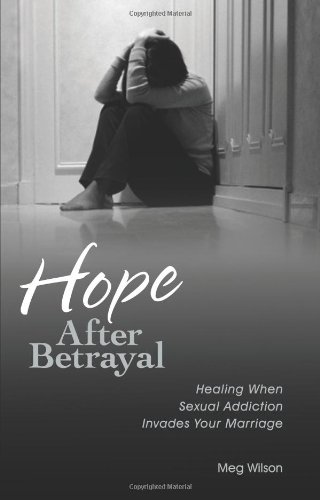
Mark Chamberlain, PhD, shares his review of this important book to help women who have been sexually betrayed by their spouses.
When the World Crumbles
by Jill Call, LMFT
Trauma shakes the very foundation on which you’ve built your life. Trauma is defined as a life-threatening event and, with betrayal trauma, it threatens the life you’ve built together. Your world can start to crumble when suddenly you discover your partner isn’t someone you know anymore.
As women, we mostly define ourselves in relation to others. “I am a wife. I am a mother. I am a sister. I am a friend.” Because we define ourselves by our relationships with others, betrayal trauma can have life-altering effects.
For example, you might think to yourself, “If my partner isn’t who I thought he was, then the life we’ve built together may not be real, and what about me is true anymore?” Or perhaps this one, “I don’t know him anymore. I don’t know myself anymore. And I don’t know my life anymore.” You can see the life-changing implications of such thoughts.
Trauma causes a myriad of symptoms. If your life has been threatened by betrayal trauma, you may experience fear, racing heart, anxiety, hyper vigilance, depression, loss of appetite, increase in appetite, apathy, low tolerance threshold, anger, sadness, impatience, losing your temper, crying, shaking, and other effects. You may begin to examine your life and fear that anything familiar cannot be trusted. That is one of the effects of betrayal trauma. It’s an earthquake that shakes the very foundation of the life you’ve built and trusted.
When betrayal trauma shakes the foundation of your life you may start to wonder if everything you’ve built has been right. You may start to question or even reject parts of your life that have always been your solid ground. This starts to create a crisis of belief and further shakes your foundation. The lyrics to a song by Parachute describe this well, “and I lost my faith, in my darkest day.”
Your ability to stand on solid ground, and have a place from which to be steadfast, strong and stable is crucial to recovery. In LifeStar we talk about “resourcing” or “getting grounded.” This refers to the recovery skill of creating stability, peace, and emotional safety for yourself. This can be done by setting boundaries, by intentional self-care, or by mindfulness meditation. There are so many ways to find your center and put you back on solid ground. When you’ve lost yourself in this crumbling world of betrayal trauma, finding your solid ground is essential to your recovery.
I recently took a trip to visit the Hoover Dam, which is on the border between Arizona and Nevada. This massive structure was built in the 1930’s with over 5 million barrels of concrete (4.5 million cubic yards). Just to give you some perspective: that’s enough concrete to pave a 2-lane highway from Seattle, WA to Miami, FL. The engineers estimated it would take nearly 80 years for all of that concrete to cure completely. To me, it’s instructive that although the foundation for the Hoover Dam is solid and strong, it has been curing and becoming stronger over the last 80 years.
Establishing your solid ground in the midst of a crumbling world takes work, and sometimes a shift in perspective. When standing on the Hoover Dam marveling at it’s massive structure, it’s easy to become sidetracked and miss the whole purpose of the dam.
It was built to manage and harness the power of the Colorado River. Before the dam, the river would flood and dry up on its own unpredictable timetable. The towns along the river depended on it for their very life, and yet it could wreak havoc to their lives through torrential flood or dried up dirt. The river caused trauma to the lives of those who so desperately depended on it. The dam created safety by forming a reservoir.
Create your solid ground and your safety. Tend to your foundation. Recognize that not all the familiar parts of your life that you’ve counted on throughout the years have betrayed you. Turn around and see the reservoir of life you have created. What is in your reservoir? Is it strength? Hope? Good friends? Kindness? Faith? Trauma may have shaken your foundation but you are finding your solid ground. It is curing and becoming stronger and stronger. And you have a reservoir of life from which to draw your own peace, stability, and emotional safety.
by Jill Call, MS, LMFT
LifeStar of St. George, Utah
It’s been said that worry is like a rocking chair, it will give you something to do but doesn’t get you anywhere. Worrying, obsessing and controlling are illusions. They’re just tricks that we play on ourselves. We trick ourselves into thinking that by worrying, obsessing, and controlling we’re doing something to solve the problem. We’re tricking ourselves into using our time and energy in non-productive ways. Spouses of pornography addicts are at high risk for buying into the illusion of control and losing time and energy to worry and obsessing.
We need to let go of our worry and attempts at control.
Let’s consider a common example that spouses of pornography addicts experience. Cindy is afraid of her husband having a slip. She’s afraid of what that would mean for his recovery, and how devastated she would feel. In fact, she’s so afraid of this that she goes out of her way to make sure he doesn’t slip. She rarely lets him out of her sight, and tries to be with him during his every waking move. Even at night, if he shifts in his sleep, she’s awake and making sure that he’s still asleep. She regulates his computer usage, his cell phone usage, and his time in the bathroom. She even starts sneaking into a room where he’s alone to “catch” him in the act. She’s giving herself an ulcer.
Can you relate to her fear? Maybe she’s afraid that he won’t manage his behavior as well as her. Perhaps she’s afraid of how much it will hurt to sit back and let him manage it and risk making mistakes trying to figure it out. Her actions are damaging her and sending a message to her husband that she doesn’t believe he can handle himself..
The truth is: she will never be able to prevent him from choosing his behavior. He will always have that ability, despite her illusion of control. The perceived control she takes to manage his behavior is an illusion. The truth is it’s not hers to worry about, obsess over, or try to control.
Also, how much is her husband accountable for his behavior in this scenario? How much is he learning about his own triggers, or pain, or self-management? His wife is stepping into his realm of learning and taking away all the important lessons. Sadly, her good intentions to help in recovery actually prevent him from learning the lessons that will enable him to stay in solid recovery.
And finally, how much agony is this poor woman in? There’s so much fear and worry. Unfortunately, she’s unwittingly added agony to this by trying to control what is not hers to control.
We must learn to let go of what is not ours.
Letting go of worry and your attempts at managing your spouse doesn’t mean you’re giving up. It means you’re learning how to love and care without making yourself sick with worry. If you allow your partner to manage his own behaviors and choices, you’re giving back to him his responsibility and accountability so he can grow. By doing this, you’re allowing your partner to take accountability for his actions and for the consequences that follow. You’re also allowing him to learn to connect to you instead of you doing everything possible to prevent him from disconnecting from you and the relationship by acting out.
Since you’re connected, the consequences of your partner’s actions will affect you. The woman in the scenario above was managing her husband’s behavior because the fear of losing her connection to him and being alone overwhelms her. If he has a slip, it signals to her that he is moving away from her which will naturally trigger more fear, pain, and sadness. She wants to manage him as a way to protect herself from being alone. But for all her worry and attempts to control, if he slips, does it ultimately hurt her any less?
If you’re giving back accountability to your husband, he is also held more accountable for how his actions affect you. Worrying about how to protect yourself from the pain of his slip is like walking around with an umbrella waiting for it to rain. While it might “rain” frequently in your relationship, walking around with an umbrella open just waiting for the rain blocks out any blue sky that might be there.
Certainly you have a right to safety and shelter. So, if there’s rain, get your umbrella. If storm clouds are gathering, get your umbrella. But hovering sheltered under your umbrella all day and night from fear of the rain robs you of the chance to have peace during good weather.
Here are a few suggestions to help you give accountability back to your husband:
There is peace and assurance and proper accountability in letting your partner own what is his. You will free yourself from the burden of doing all of the work to guarantee that you won’t lose your connection to your partner. Letting go of what is not yours will bring you more peace and make it easier to believe your partner’s own efforts at connecting with you.
1. Sexual addiction shouldn’t be treated like a real addiction.
Compulsive pornography use has all the elements of an addiction. The rate and duration increase over time. People use it to numb out pain or medicate their emotions. It causes disconnection, denial and trauma in relationships.
2. If you’re active in church you’re less likely to have a problem with pornography.
That’s not the case at all. Utah’s population is more than 60 percent Latter-day Saint and it has the some of the highest pornography subscription rates in the country. I have several theories on that, one of which is that our culture is sadly shame-based. Shame is the driving force behind addiction.
3. When people get married, their pornography addictions will stop.
This isn’t true, because pornography addiction, which is a form of sexual addiction, isn’t about healthy sex. It’s not about an intimate relationship. Sex doesn’t fulfill the lustful hit a person gets from pornography. This misconception leads to other misconceptions as well, like partners of addicts believing they can have sex more to the control their spouse’s addiction.
4. Feeling enough shame about an addiction will cause someone to seek help.
Feeling shame will cause you to hide, to go into secrecy. You’re not going to be driven to confront a problem if you have a lot of shame. Guilt is slightly different, if it’s healthy guilt. Knowing you’ve done something wrong could lead someone to treatment, but most often, it’s just pain and tough consequences that bring people to my office.
5. If the addict wants it enough, God will always take away their addiction.
I believe that God can do this, but I don’t believe that God often does. Many people desperately want to overcome their addictions, but still continue to struggle. I don’t see many miracles in the sense of people being cured simply because they have an experience with God. What I do see is that whoever gets into recovery has to have God involved to progress. Addicts use the 12-Step program and learn how to surrender to a “higher power.” God is there to help them walk the path of overcoming their addiction.
6. Sobriety is recovery.
Being sober is not enough. Recovery is a lifestyle change. It’s being transparent. It’s overcoming shame. It’s being humble and honest. Sobriety is a byproduct of recovery.
7. Compulsive pornography use only affects the user.
It’s like any addiction. It’s an attachment disorder, meaning if affects relationships. In order for someone to be addicted, they need to be in some denial, which prevents them from being authentic. It causes trauma for parents, children, spouses and all kinds of family relationships. It definitely doesn’t just affect the user.
8. Spouses of addicts should just forgive and forget. It’s not that big a deal.
Spouses are truly traumatized by their partners’ addictions in ways they might not even realize. They need to learn how to cope. They need their own recovery plan and support system.
9. Every ecclesiastical leader will know how best to help a pornography addict.
You may get the help you need from your ecclesiastical leader alone. You may not. Often well-meaning ecclesiastical leaders are untrained in dealing with this issue and are subject to many of the same misconceptions as the general population. In an effort to be helpful, sometimes religious leaders say things that unknowingly undermine the spouse as well as the person struggling with the addiction.
10. Once you’ve stopped compulsively viewing pornography and repented, you’re in the clear. The problem won’t resurface.
This is a common misconception that leads to so many more, like “If I’ve repented, I don’t need to tell my future spouse about it because I’m done.” Addiction is a disease and it’s a lifelong disease. It’s not just a moral issue. Even after repentance, you still have to work your recovery to stay sober or you’ll fall back into addiction.
11. My teenager probably hasn’t been exposed to pornography.
If you believe that, you’re most likely in denial. It’s everywhere. Almost every teenager has been exposed to pornography in some way. Parents who don’t accept it are hurting their children. Children need them to talk openly about what they might feel, what they should do and whom they should talk to when it happens.
12. Discussing pornography with a prepubescent child is unnecessary.
Exposure to pornography is happening at younger and younger ages. If they’re old enough to view it, they’re old enough to talk about it. The game has changed. The talk needs to start sooner and happen more often. Either children will learn about sex and pornography from friends at school or from their parents. It’s better to get to them first before they learn elsewhere.
13. Viewing pornography is only a problem among men.
Pornography use is increasing in all forms. It’s not just a male problem. I hear that more and more women are involved with it, but I don’t see more and more women in my practice. My theory on that is that it’s even more culturally shameful for women who have a problem, so they’re even less likely than men to come out about it.
Many years ago a car company, attempting to show the advantages of front wheel drive, aired a commercial showing an Alaskan dog sled team pushing its sled rather than pulling it. Of course, the sled moved nowhere and the dogs and sled were tangled in a chaotic mess. As a therapist specializing in the treatment of addiction and trauma, I frequently meet individuals being pushed from behind by their past experiences.
The problem with being pushed from behind is three-fold. First, they often don’t get where they want to go. Second, they often experience internal chaos, much like the sled and its dogs. Third, because the push is from behind, it is difficult to know what is pushing them. This then begs the question “what is pushing me and why does my life feel so chaotic?”
I would like to briefly answer this question and outline a framework that is helpful to me when working with clients stuck in addiction and trauma.
Within each of us are various parts of the self, or “ego”, that determine our experiences and how we manage them. These parts can be divided into 3 categories:
Exiles
Exiles are the parts of us that carry the burdens of the hurts and traumas we experience. The exile is developed at the time of the painful event and remains in the state in which it was developed. The exile is often young, powerless and vulnerable. The exile typically appears when triggered by external events, however, it may also show up in dreams or other random thoughts. When this occurs we often feel anger toward the individual(s) or event(s) that have caused the exile to surface. What makes the appearance of the exile painful is that it often leads to a reliving of the original traumatic experience.
Because the exile is young, our responses may feel very young. A trauma that occurs at the age of twelve will lock itself in the body’s memory system complete with information about how the body responded to it at that time. Despite advances in maturity on multiple levels, when an adult’s 12 year-old exile is triggered we may expect to see them respond in much the same way that a 12 year-old would respond. This may be confusing to an individual who would otherwise manage themselves differently and may even lead to further trauma depending on the severity of the reaction.
Manager
The manager has two primary objectives. First, it protects the rest of the system (you) from being overwhelmed by the burden carried within the wounded exile. Second, the manager seeks to protect the exile from being hurt again.
Managers are often critical of the self and use negativity to motivate or to keep threats at bay. They may seek to keep everything calm and reduce the threat of abandonment through subservience. Doing what other people want of them for the purpose of not rocking the boat or calling attention to their vulnerability. They may seek to remain busy to drown out the pain of perceived or real threats to their safety and security. An example of the Manager in action is seen in the fight or flight responses of primal panic that comes when people perceive threats to their primary attachments.
Managers are fierce warriors, doing what they believe to be right and good for the system. However, as they fight they often become overwhelmed by fatigue. When this occurs, there are two options available to the system: 1) allow the exile or, 2) enter into the third category, the Firefighter.
Firefighter
The Firefighter’s role is to extinguish the flames of pain within both the Exile and the Manager. This is done often through the use of impulsive, compulsive, and addictive behaviors, such as pornography use, sexual acting out, over or under eating, and over spending. The Firefighter’s intent is to extinguish flames but, instead, fans the flames and makes things worse.
As each of the parts seeks to discharge their individual responsibilities, chaos is created. The primary goal of therapy, therefore, is to create cooperation between these various parts and to allow the “self” (the core of the person that holds all of their values) to be in charge.
Each part has its place. They are not seeking to harm the other parts, only to keep the system in a state of calm and balance. What forms in this reactive state is an “intentions are pure but methods flawed” conundrum of epic proportions. Trauma and addiction recovery, therefore, must focus attention on all of these areas.
Allowing the Manager to relax requires feelings of safety, confidence, and respect in the core self and those called upon to help (partners, therapists, group members, etc.). Allowing the Exile to process its burden often times requires individual therapy and specific trauma processing interventions. The burdens carried by the Exiles can be diminished and lose their influence. Firefighters have a difficult time letting go, they are looking for any end every opportunity to leave the tedium of the firehouse to race down busy streets lights and sirens blazing. There is a bit of a rush in it, but primary in the mind of the Firefighter is whether or not they will be able to extinguish the flames before they destroy the whole system. Through the use of meditation practices, reaching out to others, insights regarding the burdens carried by the system, and a host of other therapeutic activities, the Firefighter can be both appreciated for their efforts to serve and protect the system as well as understand that the system will not be destroyed by a little flare up now and then. This will allow some breathing room between trigger and acting out and serve to maintain a higher level of safety and security.
By understanding these parts of self, one can better organize their recovery efforts. Each part needs to be understood, appreciated, and influenced by the core self. Thus, like the dog sled team, we can be pulled rather than pushed. Being pulled means that we are in greater control and can clearly see the influence that each member of the team, including our internal parts, has on the direction we are going. We can then register our own decisions and direct our lives toward healthy living.
References
Introduction to the Internal Family Systems Model by Richard C. Schwartz, Ph.D. (2001)
The holidays can be a challenging time for all of us, especially those in recovery. An increase in sugary, fatty foods, plus a decrease in structure, combined with a mixture of family chaos, can quickly become a recipe for relapse. Despite the many challenges of sustaining recovery in this season, there are essential strategies that will help you maintain momentum and enjoy the peace and joy that may be possible throughout the holidays. Here are 5 ingredients that will not only help you avoid relapse but also lead you through a more enjoyable holiday experience that moves your recovery progress forward.
Recipe for Recovery
Staying focused over the holidays will require effort. While it may initially feel bothersome to implement the above strategies, it will actually help you experience a freer holiday season. How can this be true, you might ask? Rather than seeing these suggestions as duties, consider them keys to freedom. They provide the structure that will free you from the slavery of addiction. Keeping in mind the purpose of these strategies and your reasons for staying committed will help you remain on track in implementing them. Being proactive in this way can help you finish your holiday break feeling rested, refreshed, healthy, on track, and proud of your progress.
Myths Dispelled
by Shay
awiferedeemed.blogspot.com
On January 2, 2013, a four hour conversation with my husband changed my life forever. I knew within the first 10 minutes that our marriage hung by a thread and whether or not we made it, was primarily up to him. That was the night that it became clear that my husband’s “porn problem” was actually an addiction.
For us, the diagnosis of addiction also brought us direction and resources. For the first time in our 16 years of marriage, we realized that the years of madness and Insanity actually showed cycles and patterns. In the months that followed, we isolated ourselves in a world of recovery and spent every spare second of our days reading books, blogs and forums. We found therapists, 12 step groups and group therapies. We learned that this addiction has very little to do with pornography and everything to do with Internalized Shame. As my husband dove into his recovery, I dove into my own. I learned that the wife of a pornography or sex addict, experiences Betrayal Trauma. Betrayal Trauma is often misdiagnosed as Codependency. It causes the wife to feel crazy, insane and out of control. The emotions and symptoms are very similar to PTSD. The wife of a pornography addict usually feels with the same intensity triggers, fears and trauma, as does a soldier returning home from war.
I realized early on that recovering from this deep and intense trauma was not something I could do alone. I needed help. I began to reach out. I started with a friend. Then I turned to my sister. Next was my dad and after that was a woman from one of my support groups. One by one I built my network of support, always be prayerful and cautious about who could be trusted. Today my network is extensive and each one plays a vital role in helping me receive what I need to recover.
As I have reached out and depended on the people around me who love me for support, I have come to understand that just as I needed information and education about the nature and effects of this addiction so do they. The people around me love me and hurt when they see me hurting, but sometimes because they do not understand the delicate nature of the circumstances, the advice they offer can be damaging, harmful and even traumatizing. Well intentioned clergy, therapists, family and friends, in an effort to help, using their best, but uneducated judgment offered advice that was not in the best interest of my recovery or my husband’s.
Recently, I received some of this bad advice. Due to the nature of the source and circumstances, it was intensely traumatizing to me. It sent me into a downward spiral that I had to fight tooth and nail to climb out of. As I pulled myself out of the Insanity that held me captive, I turned to my support. As a result of my recovery efforts, my network of other recovering spouses (often termed WoPAs for Wives of Porn Addicts) has become extensive. Their examples of similar experiences were validating to me, yet at the same time utterly shocking. I came to realize after surveying these brave women, that we are sometimes taught and advised on the same myths. Over and over this incorrect and often traumatizing advice was given to us as factual. You can paint a donkey and present it as a zebra, but it will in fact, always be a donkey.
I would like to dispel some of the most commonly advised myths that are given when sexual/pornography addiction is present.
1. You should protect your wife/yourself from the more damaging details and effects of the addiction.
“I’m not sure that she needs to know all of the serious details, it would just hurt her.”
“Maybe you shouldn’t tell her everything.”
“You don’t really want to know all of the details. It would be too painful.”
Often times the wife is treated with kid gloves and given the impression that she is weak and fragile. As if too much information may be irreparably damaging to her. Maybe a wife shouldn’t know every detail, but that is her place to decide that. Not her clergy, not her family or friends and it is certainly not her husband’s decision. No one knows her strength and capability better than she does. Listen to the advice you are given, feel it out in your heart and make the choice that is best for you. When deciding how much information you need, one therapist recommended asking yourself, “How would knowing this information help me heal?” And if you choose to leave out details or receive less information, which many women do, that does not make you weak or fragile, it makes you self aware. Self awareness is strength.
2. The spouse’s job is to be forgiving and be a support to her husband.
“You need to put this behind you.”
“It is ideal for the wife to be the husband’s main support person.”
“You need to forgive and forget.”
The spouse’s job is to heal from the trauma inflicted upon her first and foremost. She should never at any time sacrifice her own recovery for the recovery of her husband. She should not be pushed or pressured into forgiving him too quickly but rather should be open to allowing it to happen as she turns to the Lord to heal her. Forgiveness is a gift she gives to herself, not her husband and should sometimes be reserved for after some healing has taken place. There is no ideal or main way to heal, there is only the right way for you. You should never feel pressured to do anything that doesn’t feel right to you. If you do not feel like it is in the best interest of your healing to be your husband’s main support person, and many women feel it is not in their best interest, then that is the right answer for you and not a reflection of your lack of recovery. It is a reflection in the strength of your self awareness.
3. You need to keep the secret.
“You shouldn’t tell your friend/clergy/family member. That would betray your husband’s confidence.”
“It’s his secret, you don’t have the right to share it.”
“Telling people would shame the family.”
“We keep these things ‘in house’”.
When your husband brought addiction into your marriage, he made it your secret too. And that secret brought pain and trauma into your life. Trauma that can be healed from. But, it is a burden so intense and deep that it is usually unmanageable when tried to handle alone. We don’t have to suffer in silence and isolation. There are forums and support groups, blogs and group therapies filled with women who are supporting each other as they heal from this trial. Reach out and allow others to support you and help you heal. My life is filled with strong, loving, capable people who love me and I would be foolish and judgmental to think that they can’t be trusted with this trial in my life. That doesn’t mean that I should tell everyone I meet but it does mean that the Lord will place the people in my path that can be the most support to me and He will tell me who they are if I but ask Him. A safe person is non judgmental, respectful and won’t betray your trust. Ask the Lord who is safe for you.
4. Your response to his addiction is an over reaction.
“All guys do this.”
“Why are you so upset about this?”
“Its just porn (or masturbation or news websites). It only happens every few months.”
“You are over reacting.”
It doesn’t matter if it was once every few years or every day, the effect is the same- Deep Trauma. Diagnosable Trauma. The pain is so intense because when you chose to marry, you were on even playing fields, but the moment he chose to allow addiction into your life and marriage and hide it from you, you lost that even playing field. He had the upper hand and he hid that upper hand from you. There is nothing that you can do to even the playing fields. Nothing. It is all up to him and whether or not he chooses recovery and that reality is terrifying. It is traumatizing. So, the month you spent on the bathroom floor is normal. The showers you took, fully dressed, so your kids wouldn’t hear you cry? Normal. The time you freaked out in the grocery store and had a panic attack because the other women in the aisle was showing major cleavage? Normal. Your inability to watch regular TV without crying? Normal. Obsessively checking computer histories? Normal. Crying through church? Normal. It is all normal and a result of your Betrayal Trauma. It is what you actually feel and that is not an over reaction. One therapist said, “You are not crazy, you were betrayed. Your feelings are valid.”
5. Sex will solve the “problem”.
“You need to have more/better/more intimate sex with your husband so that he doesn’t need to look at porn.”
This was the most commonly advised myth by far. We are physiologically designed to crave a loving, emotionally, intimate connection but an addict in his addiction doesn’t crave this kind of love or true connection, he craves lust. Advising a wife of a pornography/sex addict to have more sex with their spouse to try to help with his addiction is like advising the wife of an alcoholic to drink more wine with her husband to help him get better.
Some think that porn addictions will just stop with marriage and the ability to have sex, but this is also a myth. Having a pornography addiction has absolutely nothing to do with the frequency or spiciness of sex. More/better lingerie or creativity in the bedroom won’t work. This addiction will never be solved with lust filled sex, and unfortunately, lust-driven sex is usually all the addict knows.
Sexual addiction is an emotional and intimate connection disorder and throwing more UNHEALTHY sex at it won’t solve anything. Lust is only about physical appetite, where love/true marital intimacy is a whole-self (mental, emotional, spiritual, physical) connection. The addict has to start back at the beginning and learn how to have true connection and emotional intimacy, and then physical intimacy when both partners feel things are healthy and safe.
Telling the wife to have more/better/spicier sex will only put the blame and responsibility on her, which will cause deeper trauma. The wife didn’t cause this problem and she can’t fix it.
If any of these myths sound familiar to you and cause you to recognize that addiction is in your life, I plead with you to reach out. If you have been given advice that feels off to you, trust yourself. There is a huge community of women that are healing by learning from and leaning on each other. You are not alone. You are SO NOT ALONE. Come and be a part of us and heal.
And if you are placed in a position where you are the support person to such a tender heart, before you offer advice, please do some research. Pornography addiction is a plague that is sweeping the globe and ripping the hearts and souls out of our marriages and families. It is unlike anything we have ever seen and will never be solved or fixed by the ways of the world. Help us heal by learning about the true nature of this addiction and the rippling effects that is causes. Together we can overcome this. Together we are strong.
To read more from Shay go to awiferedeemed.blogspot.com

by Geoff Steurer, MS, LMFT
Founder and Director
LifeStar of St. George, Utah
The Washington Times recently reported that about 80% of children exposed to pornography actually encounter it in their own homes. Some may be frightened by this report, however, I choose to see it as an opportunity to better protect my children.
There is so much we can do as parents to protect our children from the impact of pornography. However, most parents don’t know where to start, or, worse, aren’t paying attention.
Our children are at great risk of being exposed to the fraudulent messages of pornography, which include sexual mis-education, violence, exaggerated body types, and other gross distortions.
We need both “high-tech” and “low-tech” solutions to these challenges. High-tech solutions include learning more about the ways children can electronically access pornography and how to stay on top of the ever-changing technological landscape.
Low-tech solutions include knowing how to teach children about healthy emotion regulation and how they can reach out for help when they are exposed to pornography and other harmful materials.
Parents need to know they’re not helpless and alone in the battle to protect their children.
Concerned citizens of Southern Utah have an opportunity next month to arm themselves with cutting-edge information from some of the field’s leading experts.
On Saturday, November 16, 2013, the Utah Coalition Against Pornography (UCAP) is hosting the conference “Protecting Children and Families from Pornography and Other Harmful Materials” at the Dixie Center in St. George from 9am-2pm (visit www.utahcoalition.org for more information).
This conference was held in St. George three years ago and drew a crowd of almost 1,000 attendees. The conference originated in Salt Lake City over 12 years ago and receives the support of multi-faith groups, major corporations, and other groups.
Not only will there be top-notch presentations, there will be vendors and other groups offering parents, church leaders, and other concerned community members the latest resources to protect children and families.
The conference will open with a keynote presentation by Clay Olson, the founder of “Fight the New Drug” (www.fightthenewdrug.org). There will be two hours of workshops to educate participants on how they can help support and protect children, how to help women who have been betrayed, and understanding what couples need to heal from the impact of pornography.
Terry Wade, a local attorney and church leader, will offer the closing keynote. A panel discussion will follow.
Every day I sit with individuals and couples reeling from the devastating effects pornography has on their lives. Most of the individuals I work with were exposed to pornography in their early teen years. Now that they understand the impact pornography has had on their lives, they are motivated to better protect their own families.
Be proactive and attend this conference so you can gather the latest tools and resources to protect those you love.
Details:
What: The Utah Coalition Against Pornography regional conference - “Protecting Children and Families Against Pornography and Other Harmful Materials”
When: Saturday, November 16, 2013, 9am-2pm (registration and resource booths begin at 8am)
Where: The Dixie Center – St. George, UT
Cost: $15 pre-registration online (www.utahcoalition.org) or $20 at the door.
by Geoff Steurer, MS, LMFT
Founder and Director
LifeStar of St. George, UT
I regularly meet with men who tell me they have given up pornography and sexual acting for good and have no intentions of going back. They share how they’ve moved from darkness to light. They talk about the mighty change in their heart. I have no doubt they’re experiencing changes in their thoughts, feelings, and intentions.
However, their wives are full of doubt.
One minute he admits to having a secret life filled with sexual behaviors and the next minute he tells her he’s healed and never going back to that life. She’s wondering what happened in-between those two very distant points on the continuum.
This scenario reminds me of when I was in school doing math problems and trying convince my math teacher that I really did know the answer to the math problem, even though I wasn’t showing my work on paper. For all she knew, I was looking up the answer in the back of the book or using a calculator. No matter how hard I tried to convince her I knew how to do algebra, she wanted to see my work.
A betrayed wife needs to know how her husband moved from a life of secrets and addiction to a life of integrity. She wants to see evidence of his journey. This is critical so she can trust what she sees in front of her.
Not only does she need to see his work, but he also needs to know he can do the work. I believe in miracles and I believe that the change of heart is the first miracle that gives a man the power to face his story and make the necessary physical, emotional, spiritual, sexual, and relational changes necessary for long-term recovery. However, I don’t believe that one change of heart is enough to sustain any man in long-term recovery without him doing additional work.
Since there are no shortcuts with true recovery, showing how he went from addiction to recovery shouldn’t be difficult if he’s really doing the work. If he can’t show his work, then he’s not doing the work.
He can show his work by reaching out and opening up about his process. He can talk about what he’s learning in therapy, group therapy, 12-step meetings, his readings, and meetings with his church leader. He can show his work by interacting differently with his wife, children, and family members. His priorities will change as he spends less time in front of the TV or computer and more time in healthy living. If things look and feel the same as they did when he was active in his addiction, even though he says he’s changed, he’s not going to convince anyone until he can show his work.
Like a good math teacher, a good recovery program will help a man break down his recovery into manageable steps so he can know what he’s doing, how he’s doing it, and how to maintain it for life. He’ll also learn how to reach out to his wife and other supports to show his work. Recovery is not a mystery. It’s possible because of measurable steps taken every day to build a life of integrity and connection.