

Aug 30, 2016

Posts Tagged ‘self-care’

Drama not Trauma

Posted at September 2nd, 2013
Posted by Geoff Steurer
Tags: - - - - - - - - - - - - - -
Categories: Couples Pornography Addiction Recovery, General Sexual Addiction, Partners of pornography addicts, Shame, St. George Utah Pornography Addiction Treatment
No Comments »

20121102-IMG_7855by Noelle Christensen, LPC
LifeStar Therapist

Have you ever expressed your needs to your partner and been told “stop being so dramatic!” If so, it may have felt like the wind was knocked out of you. In fact, what you may have heard instead is something like, “What you are feeling does not matter to me.”

While it may not have been your partner’s intentions to shut down your feelings, the effects are nonetheless painful. You made a commitment to love and cherish your partner, through the good, the bad, and the ugly. At times it may feel that when you are trying to communicate, out of what you believe is a desire to make your relationship better, you may feel rejection and shame in return.

Trauma in relationships that results from pain, betrayal, abuse, and addiction is termed “relational trauma.” Relational trauma results in behaviors that can often be misinterpreted by others as dramatic. Words like codependence, avoidance, and self-doubt all describe the way relational trauma shows up in betrayed partners. Relational trauma also creates grave mistrust of others along with mood fluctuations and depression. Some of the more subtle evidences of relational trauma might include flashbacks, anxiety, rumination (thinking about painful things over and over), sleep issues, loss of sexual desire, and other physical symptoms (headaches, muscle tension, clenching of teeth, and so on).

Relational trauma is your body’s way of responding to a lack of safety within your closest relationship. Because our bodies are hardwired to connect with other people, especially within the marital relationship, any events that threaten our ability to connect with those we care about (whether the threat is real or perceived) will naturally result in behaviors that scream out, “I need you! I need your acceptance! I need your love and attention! I need to be reminded that I am good enough, that I am loveable, that I am capable, that you value me!”

These behaviors often produce the opposite effect, leaving our spouse (and others) wanting to pull away from us in the moments when we need them the most. This only intensifies feelings of pain, rejection, fear, and self-doubt for the person in trauma, perpetuating a vicious cycle of desperate behaviors followed by more rejection, which produces even greater desperation.

Don’t wait for the next dramatic encounter to begin discussing the concept of relational trauma with your partner. Chances are they also feel the fear and desperation created by relational trauma. Discuss how certain responses contribute to a lack of safety within your relationship. Talk about each other’s needs and fears. Try to stay open to suggestions about ways you can create safety for each other. Perhaps you might consider gently bringing it to each other’s attention when one of you says something that stirs feelings of fear and rejection for the other partner. You might say something like, “When you said that just now, what I heard was….”, keeping in mind that just because it is what you heard, it does not mean it is what your partner actually said or intended. Guide your partner in understanding the sensitive nerve they just stumbled upon along with the fears associated with the painful encounter.

By discussing and understanding relational trauma, you can begin to identify it within yourself and between you and your partner. By identifying it, you can learn to respond differently to your partner, and communication will begin to flow more freely as safety begins to replace apprehension and fear. You will begin to experience a new level of emotional intimacy. In addition to hastening the healing within your relationship, you will hasten your own healing by showing yourself a new level of compassion that comes from understanding how your “dramatic” reactions have only been in response to painful trauma buried deep within you.
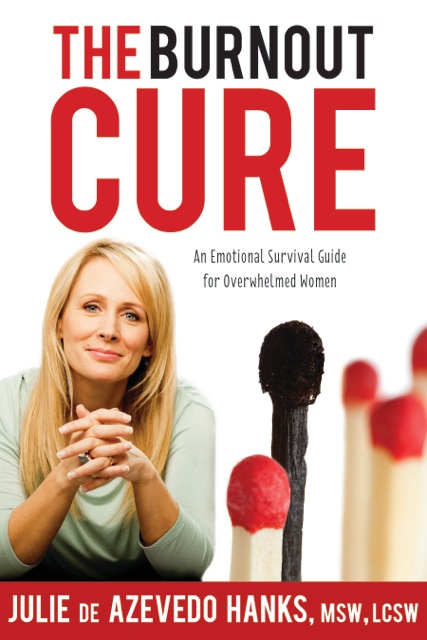

The Burnout Cure - author interview

Posted at August 13th, 2013
Posted by Geoff Steurer
Tags: - - - -
Categories: self-care
1 Comment »

BurnoutCure_Front COVER

In our LifeSTAR program we emphasize self-care for both the men and the women as a way to fight addiction and heal trauma. Physical, emotional, and spiritual self-care are essential to help individuals get grounded and do the hard work of recovery. I’ve been reading a new book by therapist Julie de Azevedo Hanks called “The Burnout Cure“, which is basically a self-care manual for overwhelmed women. While it’s written specifically for an LDS audience and addresses some of the unrealistic cultural pressures faced by LDS women, the information in this book is a gold mine for anyone who wants to improve their self-care. I have really enjoyed reading this book and learning new ways to improve my own self-care.

I had a chance to interview Julie about her book and ask some questions that I felt were relevant to individuals involved in our program. Here is the interview:

1. Why should busy women make time to read this book?

Busy women should make time to read this book because we all need a reminder that our needs matter. It’s easy to get swept up in taking care of others and forgetting to tune in to our feelings and needs and to include ourselves in our circle of care. This book is interactive and filled with exercises to help you apply the concepts and make real changes in your life.

2. What do you say to women who believe they should be able to “do it all”?

First of all, I really dislike the word “should”. I want to encourage women to decide what they value most, what brings them joy, and prioritize those things. No one can “do it all” but we can do and have the things that we value most.

3. How can women tune out the unhealthy pressure of perfectionism?

I think it’s important to remember that perfection is a myth. No one can pressure you to be “perfect” without your consent. In one section of the book I talk about the importance of acknowledging our strengths while we’re working to improve ourselves and our lives.

One of the motivators of perfectionism is the belief that our worth is tied to our appearance or our performance - that if we are performing “well” or meeting our own or other’s expectations of us that our worth goes up, and conversely, if we aren’t being a “good mother” or a “good wife” or a “good neighbor” we are somehow less valuable. It’s just not true. Our worth is constant. Our behavior is separate from our worth, and fluctuates on any given day.

4. How can a crazy-busy woman start with self-care?

I encourage women to take just one small step toward taking better care of themselves. Pick one thing that brings you joy and prioritize it every day. Maybe it’s exercise, or reading, or napping, or painting, whatever it is build it into your life. I often use the analogy of the instructions given on airplanes regarding the oxygen mask.: “Place your mask on first, then assist others.” When our personal needs are met there is more of us to offer to our loved ones.

5. Do men need self-care as much as women? Why or why not?

Humans need emotional self-care. It’s our responsibility to make sure that our emotional needs are being met. One of the “cures” I discuss in the book is “take responsibility for your own happiness” and I believe this applies equally to men and women. Since women are often acutely tuned in to the needs of others, it’s easy to let their own needs get drowned out. Women are often socialized to be the primary caretakers, they tend to wrestle with guilt, more than men do, when it comes to identifying and caring their own personal needs.

If you want to pick up a copy of the book, click here. It’s a wonderful read and a much-needed resource in today’s high-pressure and fast-paced culture.

Making Self Care a Priority

Posted at August 1st, 2013
Posted by Geoff Steurer
Tags: - - - -
Categories: Pornography Addiction, self-care, Uncategorized
No Comments »

Making self-care a priority

By Jon Worlton, LCSW

LifeStar therapist


I recently listened to a prominent religious leader use the analogy of fly fishing when teaching about Satanic efforts to “hook” and destroy human lives. Fly fishermen carefully get to know the habits and patterns of their prey. They design lures to mimic insects that fish are eating and also fish at times when fish are most active and hungry. In short, fly fisherman learn about and manipulate their prey’s needs.

Whether or not one believes in God or the Devil, it is hard to disagree with the reality of “lures” in our environment that will limit our freedom and ultimately destroy our lives. Addictions are the most common lures that hook and trap individuals. Addictions are a powerful and effective way of soothing emotional distress and satisfying unmet needs. Even though the relief is temporary, the experience the user is having feels authentic. Unfortunately, the emotionally “hungrier” one is, the more enticing the lure of the addiction. On the flip side, the more our real emotional needs have been met, the easier it becomes to discern between an artificial lure and something that will be healthy and nourishing.

The first way to begin meeting these important emotional needs is the engage in healthy self-care. Self-care is the intentional practice of meeting our needs in healthy and nourishing ways. Early in my work with the LifeStar program, I heard recovery summarized as deliberately creating healthy rituals which nourish, strengthen, and renew our individual energy. This renewal allows us to make meaningful contributions to our relationships. It is important for all of us to deliberately identify and practice self-care activities.


A blogger named Stephanie Neilson (http://nieniedialogues.blogspot.com/2010/10/3-simple-steps.html) listed the following things she does for self care:


1. Make a “Quiet Time” sign and put it on my front door when I need a nap, or down time with the boys. There is no reason why quiet signs just have to be for napping children.?I suggest you take full advantage of it too.

2. I make home a priority. Nothing ever comes before my family time. Nothing.

3. I leave at least one day a week of nothing. No house-work, yard work, errands, shopping, computer, and cooking (among other things). Life just comes as it comes.


While these are examples specific to a stay-at-home mother of small children, you can clearly see the priority she places on protecting and caring for those areas that will allow her to be more emotionally present for her loved ones.

In addition to personal self-care, relational care is also critical. Todd Olson and Dan Gray, founders of the LifeStar program, suggest the following for relationship care:


  1. A weekly date with your spouse that doesn’t include recovery/addiction talk.
  2. Weekly service (do one deliberate thing each week for your spouse)
  3. A monthly gift to your spouse (doesn’t have to be expensive).

A New Years Resolution Reality Check

Posted at January 17th, 2013
Posted by Geoff Steurer
Tags: - -
Categories: self-care, St. George Utah Pornography Addiction Treatment
1 Comment »

By Geoff Steurer, MS, LMFT

Executive Director – LifeSTAR of St. George, UT


This is the time of year when most of us are going to be on our best behavior. We have a new calendar and, therefore, a clean slate to live the kind of life we wanted to live all of last year. And the year before. And the year before that.

I’d like to help you save yourself some mental anguish by suggesting a new way of looking at our obsession with New Year resolutions.

We live in a perfectionistic age where we believe we can look perfect, act perfect, and create perfection anywhere we want to. As a result, I see many of us either apologizing in shame that we haven’t been perfect at what we were trying to accomplish, or simply giving up in defeat.
Most people manage their lives in a perfectionistic culture by either going into an extreme “control mode” or “release mode.” Both are harmful and create unnecessary pain and misery.

Today, and for the next few weeks, we’re going to see a lot of “control mode” behavior. People will be signing up for the gym, paying attention to their eating, and trying to do their goals perfectly. This level of control is like winding up a rubber band tighter and tighter. Eventually, it’s going to snap.

After the “control mode” has snapped, “release mode” takes over and the tendency is to give up and either pick a new start date in the future or completely give up and assume their goal was silly and not realistic. Or, worse, they may assume something is wrong with them. That last one is most certainly not true.

Let me suggest a third approach.

This approach is simply making the commitment that you will keep trying, especially when you make mistakes. For some, this may sound like its giving people excuses to fail, but its actually reflecting reality.

Most of us have habits and patterns that are highly resistant to change, based on years of behavioral conditioning, family patterns, and self-limiting beliefs. These changes aren’t simply going to happen by creating a steely resolve to never mess up again at the beginning of a new calendar year, or month, or whatever magical date you pick.

Instead, change is going to happen when you decide you want to get well and then commit to pay attention your mistakes, use that information as a way to make adjustments in your efforts, and gradually improve until you have made real changes.

This approach takes real courage, where living in “control mode” and “release mode” is actually playing it safe where we don’t have to be vulnerable.

I love how Theodore Roosevelt put it in his famous quote called “The Man in the Arena”:

“It is not the critic who counts; not the man who points out how the strong man stumbles, or where the doer of deeds could have done them better. The credit belongs to the man who is actually in the arena, whose face is marred by dust and sweat and blood; who strives valiantly; who errs, who comes short again and again, because there is no effort without error and shortcoming; but who does actually strive to do the deeds; who knows great enthusiasms, the great devotions; who spends himself in a worthy cause; who at the best knows in the end the triumph of high achievement, and who at the worst, if he fails, at least fails while daring greatly, so that his place shall never be with those cold and timid souls who neither know victory nor defeat.”


So, get in the arena and commit to making some changes in your life. Don’t step out of the arena when you fail to do it perfectly or consistently. And, don’t wait to step in the arena until you believe you can do it perfectly. Step in and courageously begin making the changes you need to make in your life, for as long as it takes to make them.


Slow down

Posted at November 1st, 2009
Posted by Geoff Steurer
Tags: - - -
Categories: Partners of pornography addicts, Pornography Addiction, self-care, Shame
No Comments »

Just finished reading this great commentary from Bob Greene on CNN.com on the need to slow down and connect in real-time. Individuals who struggle with pornography addiction and their partners often feel disconnected from the people who matter most to them. Their lives feel unorganized and chaotic. This is in large part to the disconnected experience that comes from shame. Shame makes us feel like we’re outside of ourselves. Whether it’s the shame of violating your own standards or the shame of feeling rejected and unloved because of someone’s choices, the disconnection still impacts the way life feels.
A major recovery task is to slow down and notice what’s around you. Unplug, turn off the phone, spend time doing nothing with those you love.

My wife recently started sitting outside at dusk to feel connected and recharged. She stops working around the house with the kids and goes outside to sit in a patio chair in front of our house. We’ve started following her out there to sit and enjoy the waning sunshine. It’s a warm, calm, and peaceful moment that lasts only about 20 minutes. It’s made a huge difference in the pace and energy of our evenings.

I’ve challenged many of my clients to start slowing down more and experience life without pressures and schedules. What can you slow down right now?